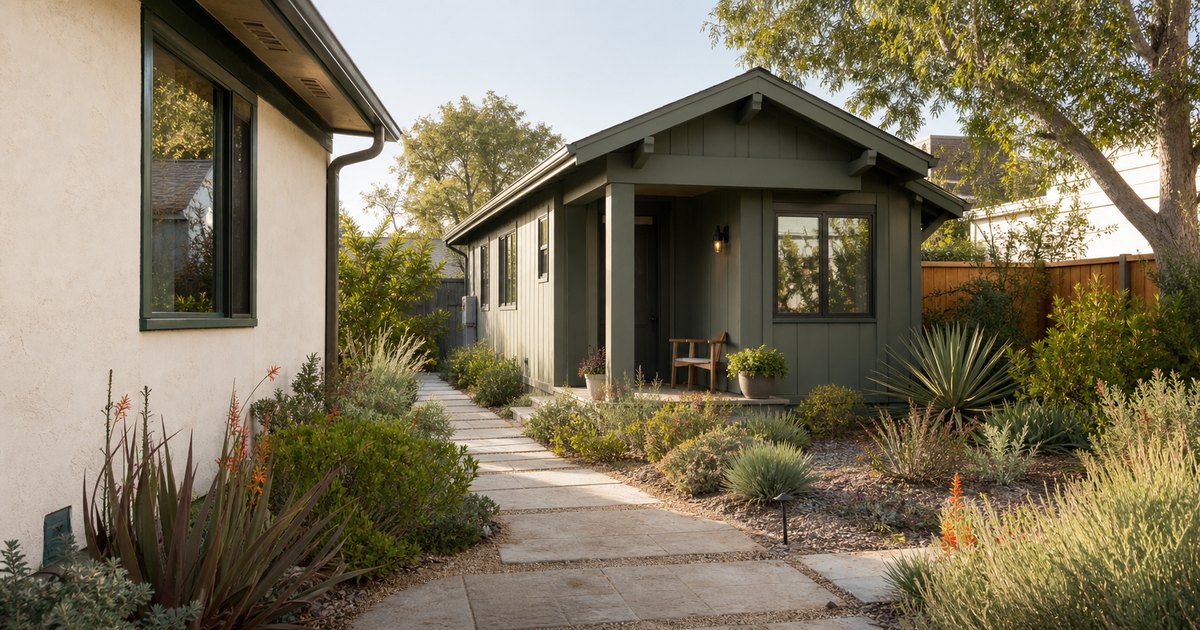
State law creates powerful approval pathways, but the correct path still depends on the parcel, existing development, local ordinance, building condition, utilities, fire requirements, coastal location, recorded restrictions, and intended use.
Law Laguna helps California owners define the property plan, identify legal and local layers, coordinate the application and transaction team, and prepare the unit for lawful rental operation.
The short answer
Before spending heavily on design:
- Confirm the parcel and governing city or county.
- Identify existing lawful dwellings and structures.
- Choose the proposed ADU or JADU category.
- Check state-law eligibility and objective local standards.
- Screen coastal, fire, utility, septic, title, easement, and HOA issues.
- Confirm permit history and physical feasibility.
- Model financing, construction, rent, tax, insurance, and management.
- Plan the future lease and owner compliance system.
The correct question is not simply “Can I build an ADU?” It is “Which lawful project on this parcel achieves the owner’s actual goal?”
The current state-law framework
California’s ADU statutes are organized at Government Code sections 66310 through 66342.
The California Department of Housing and Community Development publishes an official ADU Handbook, updated in March 2026 with an addendum addressing changes effective January 1, 2026.
Because the statutes have changed frequently, older checklists, municipal handouts, and blog posts should not be treated as current without verification.
ADU and JADU are different
Accessory dwelling unit
An ADU generally provides complete independent living facilities on a lot with a proposed or existing primary residence. It may be:
- Attached.
- Detached.
- Created through conversion.
- New construction.
- Located on certain single-family or multifamily properties.
Junior accessory dwelling unit
A JADU is a smaller unit created within the walls of a proposed or existing single-family residence, subject to its own size, kitchen, entrance, sanitation, deed-restriction, and potentially owner-occupancy rules.
As of the 2026 statutes, a JADU with shared sanitation can trigger an owner-occupancy requirement, while the rules differ when it has separate sanitation. The exact design and ordinance should be checked before relying on a prior assumption.
The approval path
State law requires ministerial review for qualifying applications and limits local agencies to authorized objective standards.
Current statutory timing includes:
- A completeness determination generally due within 15 business days.
- Written identification of incomplete items.
- A defined cure process.
- Approval or denial generally due within 60 days after a completed application when an existing dwelling is on the lot.
- Written defect or deficiency information when a qualifying application is denied.
Different timing can apply when the ADU accompanies a proposed primary dwelling, when the applicant requests delay, or when another statute controls.
Calendar from the current statute and the actual agency receipt record.
State law does not eliminate every local issue
A local ordinance can address authorized objective standards such as:
- Size.
- Height.
- Setbacks.
- Design in permitted circumstances.
- Parking within statutory limits.
- Exterior access.
- Fire and safety.
- Utility connection.
- Number and location of units.
State law can preempt conflicting or more restrictive local requirements, but it does not make plans, building standards, utility work, or every site condition disappear.
Multifamily property opportunities
State law contains pathways for ADUs on lots with existing or proposed multifamily dwellings, including specified conversions and detached units.
As of 2026, Government Code section 66323 includes defined multifamily provisions that can permit multiple detached ADUs, subject to the statute’s caps, unit count, height, and setback rules.
For an apartment property, assess:
- Lawful existing unit count.
- Existing non-dwelling space.
- Fire separation.
- Egress.
- Parking and circulation.
- Utilities.
- Tenant access.
- Habitability during work.
- Rent-regulation effect.
- Construction relocation.
- Operating income.
Do not displace, reduce services, enter units, or alter common areas without a tenancy plan.
Parking
Parking analysis depends on:
- ADU category.
- Transit proximity.
- Historic status.
- Permit parking.
- Car-share location.
- Conversion of existing parking.
- Fire or topographic condition.
- Local ordinance.
Current state law restricts replacement-parking demands when a garage, carport, covered space, or uncovered space is demolished or converted in connection with an ADU.
The owner should still plan practical parking, access, trash, emergency response, and neighbor impact.
Setbacks, height, and buildable envelope
Map:
- Parcel boundaries.
- Existing structures.
- Easements.
- Utilities.
- Slopes.
- Drainage.
- Fire access.
- Coastal constraints.
- Required open space.
- Protected trees.
- Septic.
State-law minimum pathways may override some local development standards, but a design should not assume that every physical or safety issue is preempted.
Fire sprinklers and fire access
The state ADU statutes generally do not require sprinklers in an ADU when sprinklers are not required for the primary residence, and ADU construction does not itself trigger sprinklers for the existing primary dwelling under the cited provisions.
Separate questions can include:
- Fire access.
- Addressing.
- Water supply.
- Hydrants.
- Wildland-urban-interface standards.
- Building-code triggers from other work.
- Local fire review.
Obtain written agency direction for the actual plans.
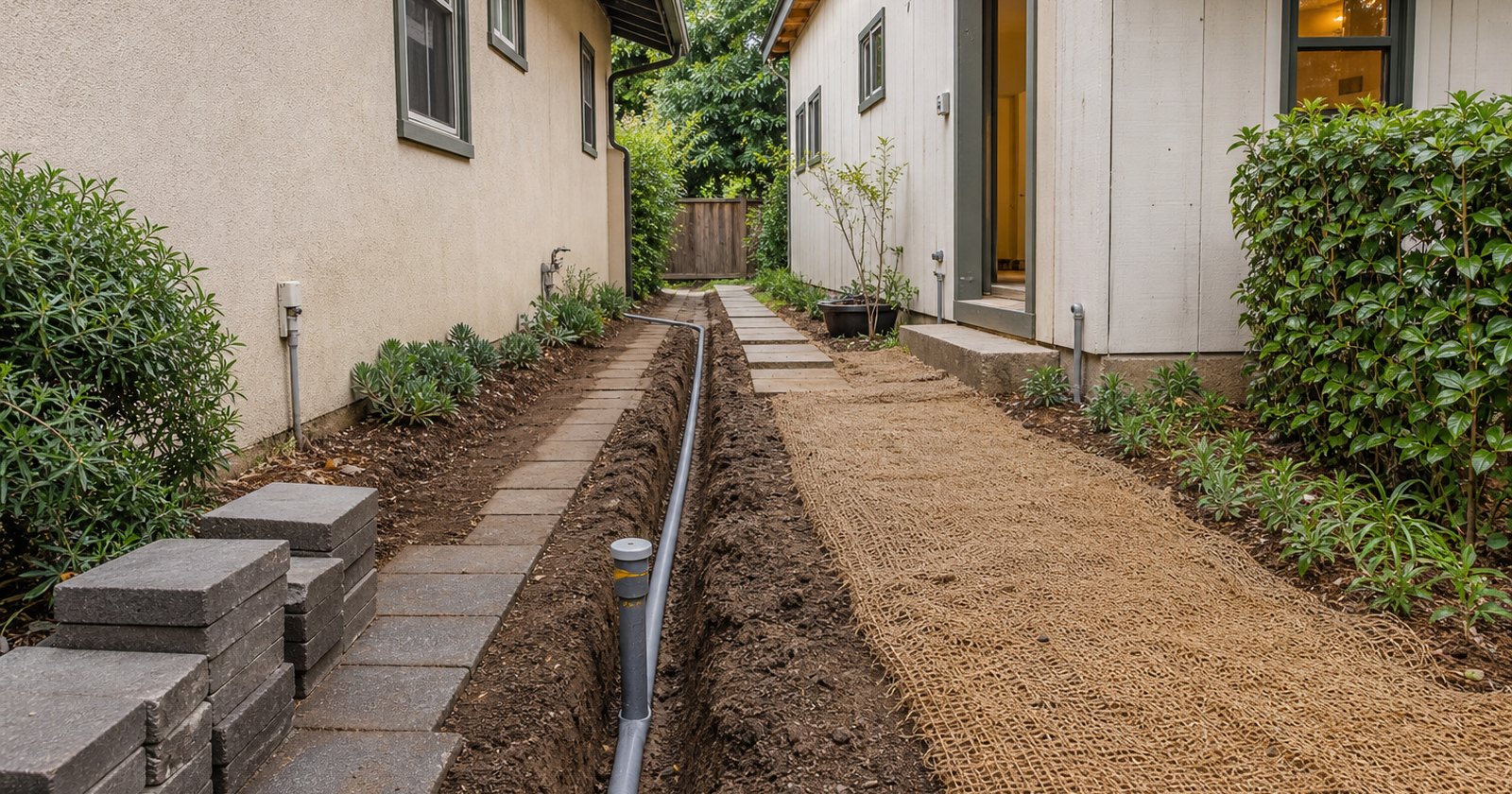
Utilities, fees, and septic
Review:
- Water.
- Sewer.
- Electrical service.
- Gas.
- Metering.
- Capacity.
- Trenching and easements.
- Connection fees.
- Impact fees.
- Septic condition and testing.
Government Code section 66311.5 includes current rules on connection and impact fees, including a state threshold for certain impact-fee treatment. Other charges and construction costs require project-specific review.
Coastal-zone property
State ADU law does not erase the California Coastal Act.
Government Code section 66329 now provides a coordinated process and defined timing for coastal development permit review of ADUs, while the applicable local coastal program and agency jurisdiction remain critical.
The California Coastal Commission issued current SB 1077 ADU guidance in 2026 to help local governments simplify Local Coastal Program processing.
Potential coastal issues include:
- Appeal or nonappeal area.
- Public access.
- Geologic hazard.
- Sea-level rise.
- Bluff and shoreline conditions.
- Water quality.
- Environmentally sensitive habitat.
- Parking and circulation.
- Visual resources.
- Certified Local Coastal Program.
Laguna Beach
Laguna Beach expressly identifies state law, its municipal code, and its certified Local Coastal Program as governing layers for ADUs and JADUs. Many Laguna projects require a coordinated city and coastal path.
Unpermitted ADUs and conversions
An existing kitchen, bedroom, converted garage, or rental history does not prove legal-unit status.
Before seeking legalization:
- Preserve existing plans and records.
- Confirm construction date.
- Inspect safety conditions.
- Review utility and septic capacity.
- Identify open code cases.
- Determine whether state delayed-enforcement provisions may apply.
- Model required upgrades.
- Consider tenant and relocation issues.
- Avoid false statements on an application or sale disclosure.
Government Code section 66331 and related Health and Safety Code provisions address specified delayed-enforcement requests. They do not guarantee approval of unsafe work or eliminate necessary correction.
Rental use
State ADU law permits local agencies to require ADU rentals for terms of at least 30 days in specified pathways, and section 66323 requires rentals under that section to be longer than 30 days. Section 66333 imposes a longer-than-30-day rule for JADUs.
Before marketing:
- Confirm local rental-duration restrictions.
- Determine rent-cap and just-cause coverage.
- Prepare required exemption notices.
- Register if required.
- Obtain a rental-business license if required.
- Verify insurance.
- Allocate utilities.
- Prepare an ADU-specific lease.
- Establish access and common-area rules.
- Address parking, storage, trash, noise, pets, and maintenance.
An ADU approval is not a short-term-lodging license.
Owner occupancy and separate sale
Do not rely on a blanket statement that owner occupancy is always required or never required.
Current law distinguishes:
- ADU from JADU.
- Shared from separate sanitation for certain JADUs.
- Government or qualifying organization ownership.
- Local separate-conveyance programs.
- Recorded deed restrictions.
Separate sale of an ADU is available only within defined statutory and local frameworks. Title, subdivision, association, tax, mortgage, affordable-housing, and local-program issues require coordinated review.
Title, easements, CC&Rs, and lenders
Public zoning approval does not decide every private right.
Review:
- Deed.
- Title report.
- Easements.
- CC&Rs.
- HOA or architectural rules.
- Mortgage.
- Insurance.
- Shared access.
- Utility rights.
- Solar agreements.
- Existing leases.
The enforceability of a private restriction may be affected by state law, but the document should not be ignored.
Transaction diligence
Buying property for an ADU
Do not rely only on a listing statement that a property is “ADU ready.”
Verify:
- Parcel jurisdiction.
- Existing lawful units.
- Permit record.
- Objective standards.
- Coastal and fire layers.
- Utilities.
- Site constraints.
- Title.
- Financing and appraisal.
- Construction budget.
- Target rental use.
Selling property with an ADU
Prepare:
- Permits and final approvals.
- Plans.
- Certificates.
- Warranties.
- Utility information.
- Lease.
- Deposit records.
- Rent and registration history.
- Disclosure of unresolved work or code issues.
Project sequence
1. Define the goal
Family use, long-term rent, value, accessibility, owner downsizing, portfolio income, or sale.
2. Create a legal-feasibility memo
Parcel, unit category, state path, local standards, coastal/fire/utility/title issues, and rental model.
3. Build the team
Architect or designer, contractor, engineer, surveyor, planner, utility, lender, insurer, tax adviser, and counsel as needed.
4. Control scope and contracts
Define plans, fees, allowances, schedule, changes, insurance, payment, permits, and responsibility.
5. Track approvals and construction
Maintain agency comments, revisions, inspections, changes, invoices, and closeout documents.
6. Prepare for operation
Lease, disclosures, rent, deposit, utilities, management, safety, local registration, and annual compliance.
How Law Laguna can help you move forward
Depending on scope, Law Laguna can:
- Prepare a legal-feasibility issue map.
- Review state and local ADU requirements.
- Coordinate coastal, title, easement, tenancy, and use questions.
- Review city comments and application issues.
- Review ownership, lender, and transaction documents.
- Draft or negotiate consultant, access, or project agreements.
- Address an unpermitted conversion or code issue.
- Review acquisition or sale of ADU property.
- Prepare the rental lease and compliance plan.
- Organize a land-use or litigation referral when specialist proceedings are required.
Law Laguna does not replace architects, engineers, contractors, surveyors, planners, tax advisers, or the permitting agency.
Questions property owners often ask
Can every California homeowner build an ADU?
State law provides broad pathways, but parcel type, existing development, proposed category, safety, utilities, coastal location, and authorized standards still matter.
How long does the city have to review an ADU application?
Current law generally requires a completeness determination within 15 business days and approval or denial within 60 days after a complete application for a lot with an existing dwelling, subject to statutory qualifications.
Can an ADU be used as a short-term rental?
Do not assume so. State law authorizes or requires rental terms of at least or longer than 30 days in specified ADU pathways, and local short-term-rental laws independently apply.
Is owner occupancy required?
The answer depends on whether the unit is an ADU or JADU, sanitation design, owner type, current state law, local ordinance, and recorded restrictions.
Can I legalize an old garage conversion?
Possibly. Construction date, safety, local records, state delayed-enforcement provisions, physical work, utilities, and tenant circumstances require review.
Do I need a coastal development permit in Laguna Beach?
Many Laguna Beach ADUs require coordination with the city’s certified Local Coastal Program, but the precise process depends on the property and project. Confirm current city guidance before filing.
Will an ADU be subject to rent control?
Possibly. State and local coverage, exemption, ownership, age, tenancy, notices, and location must be analyzed before lease-up.
Can I sell the ADU separately?
Only within specific state and locally implemented pathways. Title, subdivision, deed restrictions, mortgage, tax, association, and program requirements must be reviewed.
Related guidance
Explore the real-estate law center, review due diligence, title, and escrow, and plan the unit’s residential lease and disclosures.
Plan the unit all the way through lawful occupancy
Bring the address and assessor parcel number, city, existing plans and permits, title material, proposed design, intended use, coastal or fire information, utility facts, financing plan, and any tenant circumstances.
ADU law, local ordinances, objective standards, coastal processes, utility rules, fire requirements, and rental restrictions change frequently and require application-time verification.