California Civil Code section 1950.5 regulates the entire residential security lifecycle: what counts as security, how much may be collected, how condition must be documented, which deductions are allowed, what inspection opportunity must be offered, and how the accounting and remainder must be delivered.
The statute changed materially in 2024, 2025, and 2026. Owners should update deposit amounts, photographs, move-out procedures, and return methods rather than rely on an older checklist.
The short answer
For most residential tenancies, the deposit is limited to one month’s rent in addition to the first month’s rent. A narrow small-landlord exception can permit up to two months’ rent, but it depends on ownership, portfolio size, unit count, and service-member status.
The owner may deduct only amounts reasonably necessary for purposes authorized by the statute. The owner must offer the statutory initial-inspection process when applicable, take required photographs, and provide the accounting and remaining security no later than 21 calendar days after the tenant vacates.
What to do first
At application or lease preparation
- Confirm the maximum deposit for this owner and applicant.
- Identify every upfront charge and whether it functions as security.
- Do not describe security as nonrefundable.
- State the deposit accurately in the lease and ledger.
At move-in
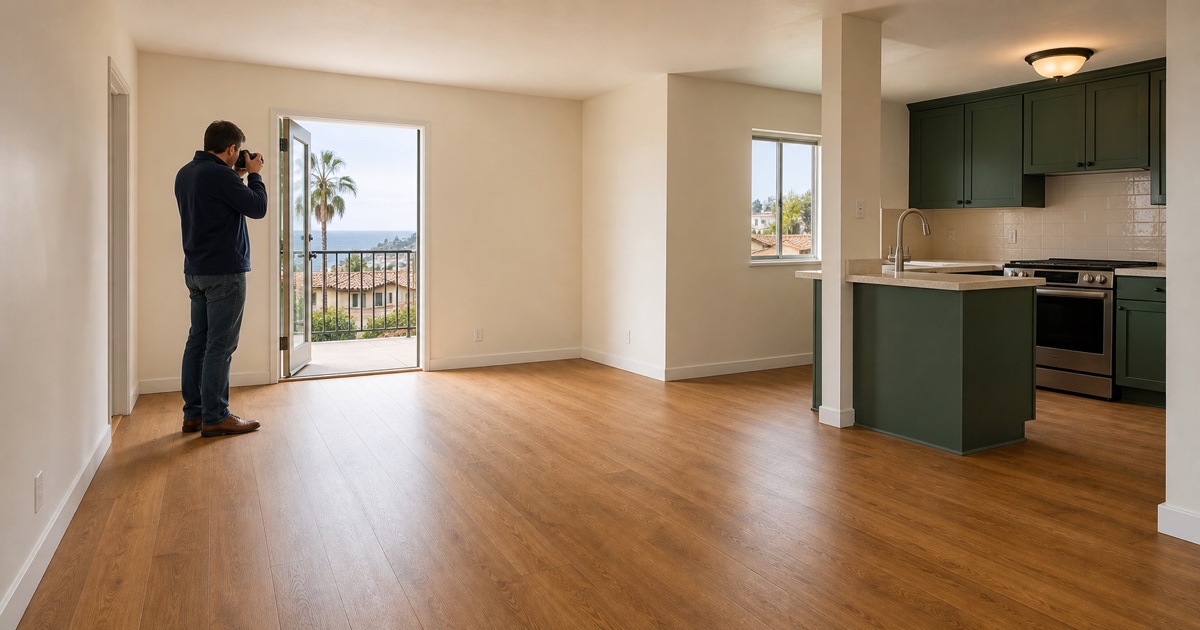
- For a tenancy beginning on or after July 1, 2025, take photographs immediately before or at inception.
- Complete a condition record tied to specific rooms, surfaces, fixtures, furnishings, and appliances.
- Preserve the original files with dates and context.
When move-out is approaching
- Give the written notice of the tenant’s option to request an initial inspection and right to be present.
- Schedule and document the inspection when requested.
- Give the required proposed-deduction statement.
- Keep communications, notices, waivers, and access records.
After possession returns
- Photograph before any repair or cleaning for which a deduction will be claimed.
- Photograph again after the repair or cleaning is complete.
- Gather invoices, receipts, labor records, and explanations.
- Complete the accounting and return within 21 calendar days.
- Follow the current electronic-return rules when they apply.
What counts as security
Civil Code section 1950.5 defines “security” broadly. It can include a payment, fee, deposit, charge, or advance rent imposed at the beginning of the tenancy and used for specified purposes. Calling an amount a “pet deposit,” “cleaning fee,” “last month’s rent,” or “furnishing deposit” does not necessarily remove it from the statutory total.
Application screening fees are separately governed by Civil Code section 1950.6. A genuine tenant-requested alteration agreement is another specific statutory category.
The lease may not characterize security as nonrefundable.

Current deposit limits
General rule
Section 1950.5 generally caps security at one month’s rent, in addition to first month’s rent paid on or before initial occupancy.
Narrow small-landlord exception
An owner may demand up to two months’ rent as security only when both conditions are satisfied:
- The landlord is a natural person, or a limited liability company whose members are all natural persons.
- The landlord owns no more than two residential rental properties that together contain no more than four dwelling units offered for rent.
The statute includes a defined family-trust rule. The exception does not apply to a prospective tenant who is a “service member” as defined by the statute.
This exception should not be used based on unit count alone. Ownership through corporations, layered entities, multiple properties, or a trust outside the statutory definition can change the result.
Service-member provisions
Beginning April 1, 2025, if a service member is charged higher-than-standard or advertised security because of credit, housing history, or another tenant-related factor, the landlord must provide a written explanation by the lease-signing date. The lease must state the date for returning the additional amount, and that amount must be returned after no more than six months of residency if the tenant is not in arrears during that period.
The small-landlord two-month exception does not apply to a prospective service-member tenant.
Lawful uses and deductions
The statute permits security to be used for amounts reasonably necessary for specified purposes, including:
- Unpaid rent.
- Repair of tenant- or guest-caused damage beyond ordinary wear and tear.
- Cleaning reasonably necessary to return the unit to the same cleanliness level as at the beginning of the tenancy.
- A qualifying lease-authorized default involving restoration, replacement, or return of personal property or appurtenances, excluding ordinary wear and tear.
The statute prohibits claims for preexisting damage, defective conditions that predated the tenancy, and ordinary wear and tear. Materials, supplies, contractor work, owner labor, and employee labor are limited to reasonable amounts needed to restore the unit to its inception condition, excluding ordinary wear.
A lease clause requiring professional carpet cleaning does not automatically authorize a deduction. The actual cleaning must be reasonably necessary under the statutory standard.
Initial inspection before move-out
Within a reasonable time after notice that the tenancy will terminate—or before the fixed term ends—the landlord must notify the tenant in writing of the option to request an initial inspection and the right to be present.
If requested:
- The inspection occurs at a reasonable time, no earlier than two weeks before termination or lease end.
- The parties attempt to agree on the date and time.
- At least 48 hours’ written notice is generally required unless both parties sign a written waiver.
- The landlord proceeds even if the tenant is absent, unless the tenant withdrew the request.
- The landlord gives the tenant an itemized statement identifying proposed repairs or cleaning deductions and including the statutory text required by section 1950.5.
- The tenant has an opportunity to remedy identified conditions before the tenancy ends.
The inspection procedure does not apply to certain terminations under Code of Civil Procedure section 1161. The exception should be verified before omitting the offer.
An initial inspection is not the final accounting. Conditions can arise later, be hidden by possessions, or remain uncured.
Required photographs
Section 1950.5 now requires photographs at defined points:
- For tenancies beginning on or after July 1, 2025, immediately before or at the inception of the tenancy.
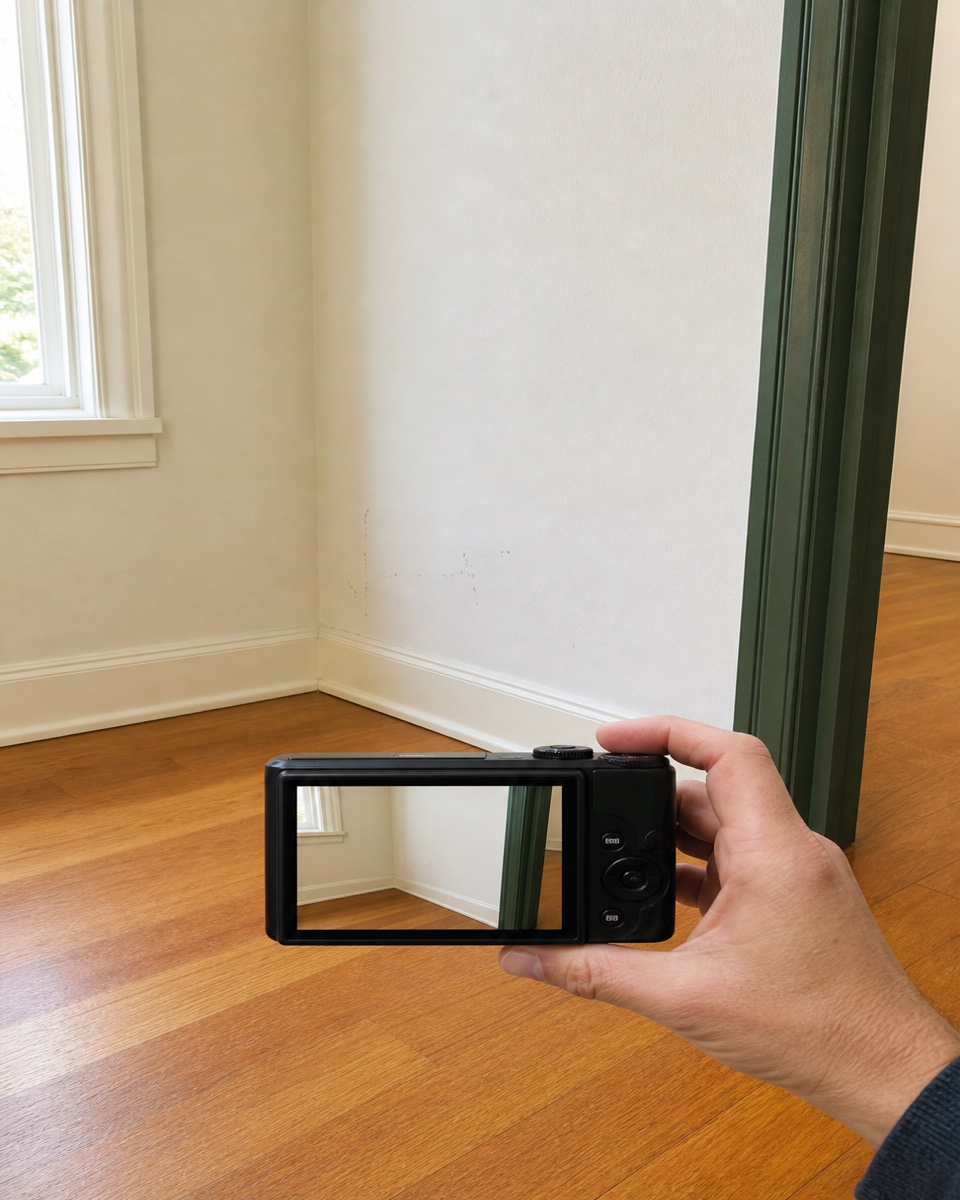
- Beginning April 1, 2025, within a reasonable time after possession returns and before repairs or cleaning for which a deduction will be claimed.
- Within a reasonable time after those repairs or cleanings are complete.
If deductions are taken for repairs or cleaning, the required photographs must accompany the itemized statement, along with the written cost explanation and supporting documentation. The statute permits specified delivery methods for the photographs.
Photographs should be systematic and identifiable. A folder of undated close-ups may prove less than an organized set showing room, location, scale, and condition.
The 21-day accounting
No later than 21 calendar days after the tenant vacates, the landlord must provide an itemized statement identifying the security received, the basis and amount of deductions, and the disposition of the deposit, and must return the remaining security.
Supporting requirements can include:
- A description of owner or employee labor, time spent, and reasonable hourly rate.
- Contractor bills, invoices, or receipts and contact information.
- Receipts or other permitted vendor documentation for materials and supplies.
- Before-and-after photographs and written cost explanations for repair or cleaning deductions.
- A good-faith estimate when work or documentation cannot reasonably be completed within 21 days, followed by the completed documentation within the statutory follow-up period.
The statute contains a limited $125 documentation exception and a tightly timed waiver process, but a tenant may request the documentation afterward. The safest ordinary workflow is to preserve and provide complete support.
Electronic return rules effective in 2026
Section 1950.5 was amended effective January 1, 2026.
If the landlord received the security or rental payments electronically, the statute now generally requires the remaining security to be returned electronically to an account designated by the tenant in writing, or through another available electronic or virtual method agreed to in writing. The parties may instead agree in writing to another return method.
The landlord must also give written notice of the tenant’s right to electronic return within a reasonable time after notice of termination or before lease end, unless a statutory exception or prior written alternative-method agreement applies.
Multiple-adult tenancies have additional payee, allocation, and delivery rules. Owners should decide and document the return arrangement before the 21-day deadline.
Sale or transfer of the property
When the landlord’s interest ends through sale, assignment, death, receivership, or otherwise, section 1950.5 requires the landlord or agent either to transfer the remaining security to the successor and notify the tenant or to return it with the required accounting. The successor has its own obligations and potential liability.
Security should be reconciled as a distinct closing item in every tenant-occupied sale.
Mistakes that can make the problem harder
- Using an older two-month or three-month deposit rule.
- Assuming every “small owner” qualifies for the statutory exception.
- Charging a service member additional security without the required explanation and six-month return term.
- Taking only move-out photographs and having no inception record.
- Cleaning or repairing before taking the required pre-work photographs.
- Deducting replacement cost without accounting for prior condition and ordinary wear.
- Missing the initial-inspection offer.
- Treating the initial statement as the final accounting.
- Sending a lump-sum deduction with no invoices, labor detail, or photographs.
- Missing the electronic-return notice or multiple-adult payee rules.
- Waiting for a final invoice beyond day 21 instead of using the statutory estimate process.
How Law Laguna can help you move forward
Law Laguna can review the lease, deposit amount, ownership qualification, service-member issue, move-in file, inspection notices, photographs, proposed deductions, invoices, labor calculation, tenant communications, return method, and 21-day accounting.
The work product may include:
- A deposit-limit assessment.
- A move-in and move-out workflow.
- An initial-inspection notice and process review.
- A proposed-deduction and evidence matrix.
- Review of the itemized accounting before delivery.
- A response to a tenant demand.
- An organized pre-litigation file and referral package if a filed dispute becomes necessary.
Related services and guides
- Legal services for California rental-property owners
- Move-In and Move-Out Property Documentation
- Residential Lease Drafting and Review
- Rent Payments, Late Fees, and Other Charges
- Significant Security-Deposit Disputes
- Local Landlord Law Center
Questions property owners often ask
What is the general California security-deposit limit?
For most residential tenancies, the cap is one month’s rent in addition to first month’s rent. A narrow exception can permit two months for a qualifying small landlord, but ownership, portfolio size, unit count, trust status, and service-member status must be reviewed.
May a landlord charge a nonrefundable cleaning fee?
Section 1950.5 defines security broadly and states that a lease may not characterize security as nonrefundable. Cleaning deductions must satisfy the statutory purpose and reasonableness standards.
Must a landlord offer a pre-move-out inspection?
When the statutory procedure applies, the landlord must give written notice of the option to request an initial inspection and the right to be present. The inspection is conducted if the tenant requests it.
Are move-in photographs mandatory?
Yes for tenancies beginning on or after July 1, 2025. The landlord must take photographs immediately before or at inception.
Are move-out photographs mandatory even if there is no dispute?
Beginning April 1, 2025, photographs are required before and after repairs or cleaning for which the landlord will claim a deduction. A no-deduction return presents a different issue, but ordinary condition documentation remains prudent.
When must the remaining deposit be returned?
The itemized statement and remaining security are due no later than 21 calendar days after the tenant vacates. If final work or documentation cannot reasonably be completed, the statute provides a good-faith-estimate and follow-up process.
Must the deposit be returned electronically?
Under the 2026 amendment, electronic return generally applies when the landlord received the security or rent electronically, subject to the tenant’s written designation, agreed alternate methods, and statutory exceptions.
Can a landlord deduct the full cost of replacing an old item?
The statute limits deductions to amounts reasonably necessary to restore the premises to inception condition, excluding ordinary wear and tear. Age, prior condition, remaining useful life, repair alternatives, and actual cost all require analysis.
Official legal sources
The controlling statewide starting point is California Civil Code section 1950.5, amended by AB 414 effective January 1, 2026. Payment-method issues may also involve Civil Code section 1947.3.
Subsidized housing, local ordinances, bankruptcy, sale, death, domestic-violence termination, and pending possession proceedings can require additional analysis.
Laws and local procedures change. This page is general information, not legal advice.
Review the file before the 21-day clock controls the decision
Law Laguna can assess the deposit, inspection, photographs, deductions, supporting documents, and return method before the accounting is delivered.