
The work may involve a tenant-occupied sale, commercial lease, title review, or property-access problem. It can also involve broker conduct, investor ownership, a section 1031 exchange, or whether an ADU or other use can be approved.
Law Laguna approaches those matters with the same principles that guide Law of the Landlord:
- Identify the decision.
- Understand the asset and business objective.
- Find the facts that change the legal analysis.
- Define useful work product.
- Address risk early enough to preserve options.
Real estate law connected to ownership
This section is intentionally adjacent to—not a replacement for—the site’s owner-side landlord focus.
The strongest matters are those in which property law, contracts, operations, and ownership strategy meet:
- A landlord acquiring or disposing of a rental property.
- A business owner negotiating the premises from which the business operates.
- An investor structuring acquisition, governance, or exit.
- A seller managing disclosures, title, tenancy, and closing.
- An owner whose use or value is affected by a neighbor, easement, broker, or land-use issue.
Law Laguna’s broader business-law practice can also help connect the real-estate document to entity, governance, contract, transaction, and operating questions.
Commercial landlord leases
A commercial lease allocates far more than rent and term. It can determine:
- Permitted use.
- Buildout and delivery.
- Tenant-improvement obligations.
- Operating expenses and common-area costs.
- Maintenance and repair.
- Insurance and indemnity.
- Compliance and accessibility responsibilities.
- Assignment, subletting, and change of control.
- Guarantees and security.
- Options and expansion rights.
- Casualty, condemnation, default, remedies, and exit.
For an owner, the document should reflect the property, intended tenant, financing, risk allocation, management practice, and long-term asset plan.
Law Laguna can assist with owner-side commercial lease drafting, review, negotiation, amendments, assignments, renewals, defaults, workouts, and planned exits.
Commercial lease defaults, workouts, and termination
Not every default should produce the same response.
The owner may care about:
- Immediate payment.
- Preserving a valuable tenant.
- Requiring additional security.
- Recovering the space.
- Coordinating with a guarantor, lender, or successor.
- Limiting property damage and vacancy.
- Repositioning or selling the asset.
The lease, notice provisions, course of dealing, mitigation obligations, local facts, tenant solvency, and business objective all matter. A workout or exit agreement should resolve the known problem without leaving avoidable ambiguity about possession, money, property, releases, restoration, and future claims.

Purchase and sale transactions
A real-estate purchase agreement is a decision system for the transaction. It should identify:
- What is being acquired or sold.
- How title will be held or transferred.
- Price and deposit mechanics.
- Financing.
- Due diligence.
- Property condition.
- Disclosures.
- Representations and covenants.
- Title and survey matters.
- Tenant and lease issues.
- Casualty and condemnation.
- Closing conditions.
- Default and termination.
- Post-closing obligations.
Law Laguna can help owners and investors move from letter of intent through agreement, due diligence, amendment, closing, and post-closing issue spotting.
Buying or selling tenant-occupied property
Tenant-occupied property requires transaction and tenancy analysis at the same time.
The parties may need to address:
- Lease and addendum review.
- Rent, deposit, and ledger reconciliation.
- Estoppels and tenant records.
- Local registration and rent-control history.
- Open repair, accommodation, notice, or dispute matters.
- Security-deposit transfer.
- Access and showing procedures.
- Owner move-in, renovation, withdrawal, or sale assumptions.
- Representations about tenancy status.
- Allocation of pre-closing and post-closing responsibilities.
An acquisition model that assumes immediate possession or unrestricted rent can fail if the tenancy and local law were not reviewed during diligence.
Due diligence, disclosures, title, and escrow
The legal diligence process should be tailored to the planned use and the risk the client is actually taking.
Potential review includes:
- Title and preliminary reports.
- Exceptions, easements, covenants, and access.
- Surveys and boundary information.
- Seller disclosures.
- Leases and occupancy.
- Zoning and permitted use.
- Permits and open violations.
- Environmental and physical reports.
- Service and management contracts.
- Insurance and claims.
- Financing conditions.
- Escrow instructions and closing deliverables.
Counsel does not replace the work of inspectors, engineers, environmental professionals, title officers, surveyors, brokers, accountants, or tax advisers. Good legal diligence identifies what those professionals must answer and brings the results back into the agreement and closing plan.
Property and neighbor disputes
Property disputes can affect use, access, privacy, development, insurability, financing, and sale.
The file may include:
- Deeds and title records.
- Easements and recorded covenants.
- Surveys and maps.
- Permits.
- Photographs and video.
- Historic use.
- Communications.
- Expert reports.
- Repair or damage evidence.
- Insurance positions.
The first legal task is to identify the interest at stake and the practical result the owner needs. A negotiated access agreement, license, boundary accommodation, repair plan, mediation, or demand may be more valuable than immediately expanding the dispute.
Explore property and neighbor disputes
Easements, boundaries, encroachments, and access
These matters can involve the location, scope, duration, maintenance, overburdening, obstruction, or termination of claimed rights.
Explore easement and access issues
Nuisance, trespass, trees, noise, and views
The legal labels matter, but so do the evidence, property context, local ordinances, available remedies, and possibility of a durable agreement.
Real-estate broker duties and disputes
Broker-related matters may involve:
- Listing and buyer representation agreements.
- Commission rights.
- Fiduciary duties.
- Disclosures.
- Conflicts and dual agency.
- Advice and representations.
- Transaction documentation.
- Failure to investigate or communicate material information.
- Defense of a claim against a broker.
The analysis should begin with the written agreements, agency relationship, transaction chronology, disclosures, communications, and claimed loss.
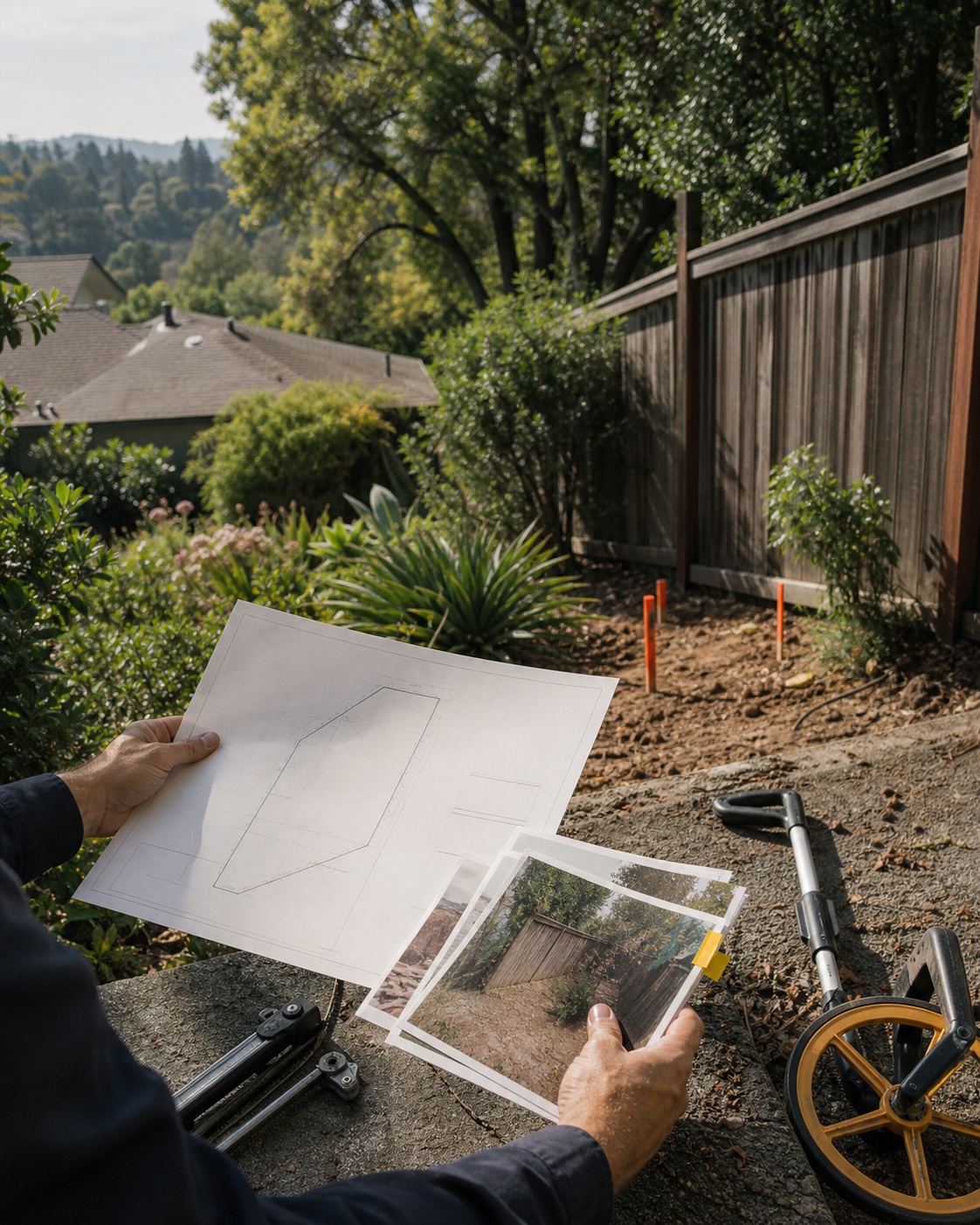
Section 1031 exchanges and investor ownership
An exchange is not simply a box to check at closing. Timing, property qualification, taxpayer identity, contract assignment, qualified-intermediary coordination, financing, title, entity structure, and the client’s broader tax plan may interact.
Law Laguna can help coordinate the legal and transaction pieces with the client’s qualified intermediary, tax adviser, accountant, broker, lender, title company, and escrow. Tax consequences require advice from a qualified tax professional.
Investor ownership questions can also include:
- Title holding.
- LLC or other entity coordination.
- Co-owner rights.
- Capital contributions.
- Decision authority.
- Transfer restrictions.
- Management.
- Deadlock.
- Distribution and exit.
ADUs, rental conversion, zoning, and development strategy
The ability to build or use space does not come from a statewide headline alone.
A project may require review of:
- State housing and ADU law.
- Local zoning.
- Building standards.
- Permits.
- Coastal regulation.
- Utilities and access.
- Existing tenancy.
- Short-term-rental restrictions.
- Recorded covenants.
- HOA or common-interest-development restrictions.
- Property tax, income tax, finance, and insurance implications.
Law Laguna can help identify the legal decision points and coordinate with architects, planners, expediters, engineers, contractors, brokers, and tax advisers. The scope should distinguish legal analysis from design, engineering, and permit-processing work.
How Law Laguna approaches a property matter
1. Define the objective
Is the client buying, selling, leasing, preserving income, obtaining possession, protecting access, resolving interference, developing, refinancing, or exiting an investment?
2. Identify the governing documents and records
The relevant file may include contracts, leases, title records, maps, disclosures, entity documents, permits, agency records, correspondence, and professional reports.
3. Build the right team
Real-estate work often requires several professionals. The engagement should identify who answers the legal, title, tax, brokerage, finance, design, engineering, inspection, insurance, and litigation questions.
4. Deliver decision-ready work
Depending on scope, work product may include:
- A drafted or revised agreement.
- An issue list.
- A diligence report.
- A title or document assessment.
- A negotiation plan.
- A demand or response.
- A transaction checklist.
- A closing or post-closing plan.
- A referral package where filed litigation or specialist work is needed.
Questions property owners often ask
Does Law Laguna represent both landlords and commercial tenants?
The commercial-leasing section is owner-focused, but Law Laguna may consider selected commercial-tenant matters where conflicts, scope, and business fit permit. The client and side represented must be clear before confidential information is reviewed.
Can you help sell a property that still has tenants?
Yes. The transaction should account for leases, deposits, rent, local registration, notices, open disputes, access, representations, closing credits, document transfer, and the buyer’s intended use. Tenant-related assumptions should be tested during diligence.
Do you provide tax advice for a 1031 exchange?
Law Laguna can assist with legal and transaction coordination, but federal and state tax consequences should be reviewed by a qualified tax adviser. The qualified intermediary must also be engaged at the correct stage.
Can you resolve a boundary or easement dispute without filing a lawsuit?
Some matters can be evaluated and negotiated through records review, survey work, a demand, mediation, or an agreement. Others require court relief. Law Laguna focuses on assessment, documents, negotiation, and pre-litigation strategy and can help organize a referral when filed litigation is necessary.
Do you handle residential home purchases?
The practice may consider residential transactions where attorney involvement adds value, including significant contract, title, disclosure, tenancy, ownership, or dispute issues. Scope depends on the transaction and timing.
Can you determine whether an ADU is allowed?
Legal review can identify state and local rules and issues that require resolution, but feasibility may also depend on planning, building, coastal, utility, title, engineering, and design facts. The appropriate professionals should work from the same property-specific assumptions.
Discuss the property decision before the documents harden around it
Legal review is most useful while the client still has options—before a lease is signed, a diligence period expires, a notice is sent, a closing occurs, or a neighbor dispute becomes entrenched.
Explore the complete Law of the Landlord knowledge platform.
Each linked legal guide explains the jurisdiction and rules relevant to that topic.