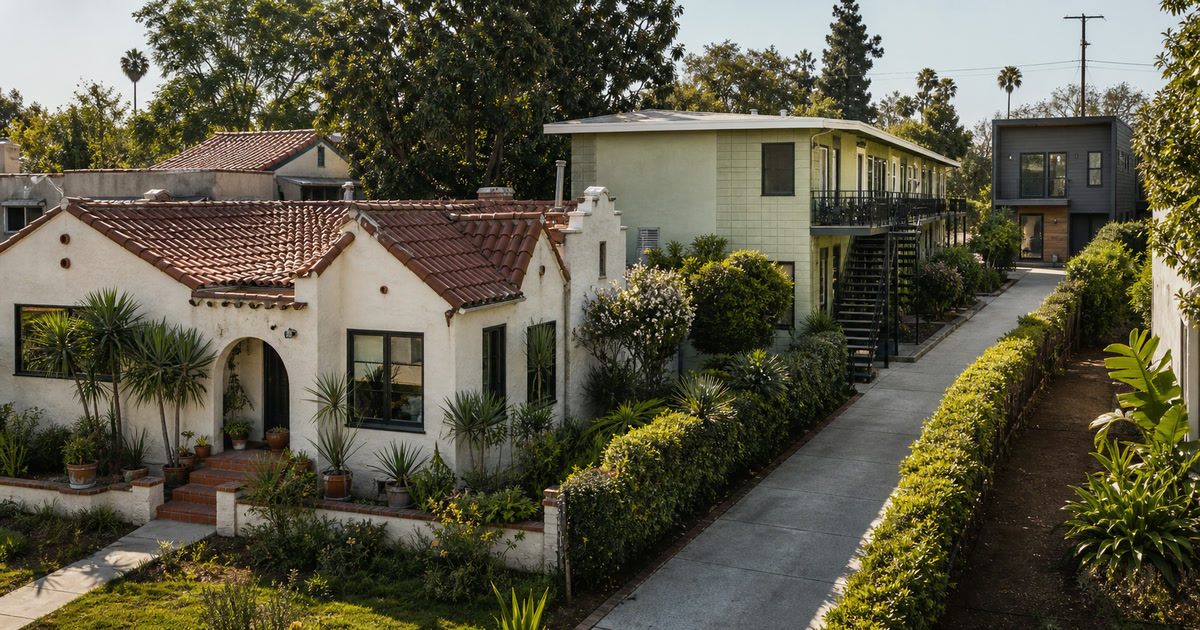
A City of Los Angeles rental may fall within one or more systems:
- The Los Angeles Rent Stabilization Ordinance, or RSO.
- The Los Angeles Just Cause Ordinance, or JCO.
- California’s Tenant Protection Act, often called AB 1482.
- Citywide registration, notice, anti-harassment, habitability, inspection, and filing requirements.
- A specialized affordable-housing, mobilehome, hotel, short-term-rental, or other regulatory program.
The Rent Stabilization Ordinance (RSO) can limit rent and regulate terminations, registration, and other tenancy issues. The Just Cause Ordinance (JCO) generally adds termination and relocation rules for many City units outside the RSO, but it does not set a local rent cap. California’s statewide rent cap or just-cause rules may still apply even when a City exemption does.
The result depends on the parcel, structure, unit, ownership, tenancy, and proposed action—not just a date shown on a real-estate listing.
Start with jurisdiction, not the mailing address
A property with “Los Angeles” in its postal address may be:
- Inside the City of Los Angeles.
- In unincorporated Los Angeles County.
- In another incorporated city.
The City RSO and JCO do not apply countywide. Unincorporated areas have a separate Rent Stabilization and Tenant Protections Ordinance, and cities such as Santa Monica and West Hollywood have their own systems.
Confirm the municipal boundary before applying a City rule.
The practical difference among RSO, JCO, and state law
| Issue | RSO property | JCO property | Neither local system |
|---|---|---|---|
| Typical starting point | Covered City rental in an older structure or certain replacement unit | Most City residential rentals not governed by RSO | A true City exemption or a property outside City jurisdiction |
| Local rent limit | Yes, subject to current RSO rules | No JCO rent cap | No local cap under these ordinances |
| Local just cause | Yes | Yes after the ordinance’s tenancy threshold | Possibly not under these ordinances |
| No-fault relocation | Often required | Often required | State or another law may still require it |
| LAHD registration or fee | Generally yes, unless a current exemption applies | Generally yes, unless a current exemption applies | Other registration, billing, or compliance rules may still apply |
| California AB 1482 | Must be checked as an additional layer | Must be checked as an additional layer | May still impose rent-cap or just-cause duties |
This table is a screening tool, not a coverage determination. Exceptions, replacement units, ownership, recorded restrictions, subsidies, unit configuration, and notice history can change the answer.
When the RSO may apply
LAHD’s current coverage guidance states that a rental unit may be subject to the RSO if the property was built on or before October 1, 1978. Units constructed after July 15, 2007 to replace demolished RSO units may also be covered.
The ordinance’s definition is broader and more detailed than “old apartment building.” Depending on the facts, potentially covered housing can include:
- Apartments and duplexes.
- Condominiums.
- Multiple dwellings on one parcel.
- Guest rooms and certain longer-term hotel or rooming-house occupancies.
- Residential units associated with mixed-use property.
- Certain ADUs, JADUs, conversions, and replacement units.
- Mobilehome or recreational-vehicle spaces covered by the ordinance.
The current code also contains exclusions and special rules. A single-family dwelling may be treated differently from multiple dwelling units on the same parcel. Government, institutional, transient, nonprofit, affordable, and other specialized housing can require separate analysis.
Construction date is evidence, not the complete answer
Review:
- The first certificate of occupancy.
- Temporary certificates of occupancy.
- Residential building permits issued before the cutoff.
- Later additions or conversions.
- Demolition and replacement history.
- Whether formerly controlled units were removed.
- The number of lawful and actual dwelling units.
- ADU or JADU approvals.
- Recorded affordability or regulatory documents.
- Prior LAHD determinations and registration records.
A database flag can be useful without being conclusive. Older records may be incomplete, and a parcel can contain units with different histories.
When the JCO may apply
LAHD states that the JCO covers most City residential properties not regulated by the RSO, including many units built after October 1, 1978.
For a covered tenancy, the JCO’s just-cause protections generally begin at the end of the initial lease term or after six months of occupancy, whichever occurs first.
The JCO:
- Requires a legally recognized ground to terminate a covered tenancy.
- Regulates at-fault and no-fault termination.
- Can require relocation assistance for no-fault termination.
- Requires City notice-filing procedures.
- Has an annual registration or enforcement-fee system.
- Does not itself regulate rent increases.
California’s rent-cap statute can still govern a JCO unit. An owner should never treat “JCO only” as permission to raise rent without checking state law, the lease, notice timing, registration, subsidy rules, and any emergency order.
Important JCO exceptions require exact facts
Current LAHD guidance identifies exceptions or limited exceptions that can include:
- Certain transient hotels.
- Licensed care facilities.
- Fraternity or sorority housing.
- An owner’s roommate.
- Certain cooperatives.
- Certain nonprofit homeless or short-term treatment facilities.
- Some government- or HACLA-owned property.
- Certain deed-restricted affordable housing.
- Certain dormitories.
- A two-unit property when the second unit was occupied by an owner for the entire tenancy.
- A qualifying single-family home or condominium when ownership and statutory written-notice requirements are satisfied.
The single-family-home or condominium exception is not automatic. Current guidance ties it to ownership conditions and the written exemption notice prescribed by California law. The limited exception may be unavailable if another dwelling is on the same lot or in the same structure and cannot be sold separately (is not “separately alienable”).
An exemption from one obligation is not a blanket exemption from all City or state law.
AB 1482 is a separate coverage decision
California Civil Code sections 1946.2 and 1947.12 establish statewide just-cause and rent-cap systems, with different coverage periods and exceptions.
A property can be:
- RSO-covered and also affected by state law.
- JCO-covered and subject to the state rent cap.
- Exempt from the JCO but covered by state law.
- Exempt from the state rent cap but governed by City just cause.
- Outside both rent caps yet still subject to notice, registration, contract, fair-housing, habitability, anti-retaliation, and other rules.
State exemptions can depend on:
- The type and age of the property.
- Whether units can be sold separately.
- The owner’s legal form.
- Whether a corporation or real estate investment trust is involved.
- Whether an LLC has a corporate member.
- Whether the required exemption language was delivered.
- Whether another dwelling is on the parcel.
- A deed restriction, subsidy, or affordable-housing program.
A coverage review should answer six questions
1. Where is the parcel?
Confirm City, county, and any specialized jurisdiction.
2. What is the physical and legal unit history?
Collect certificates of occupancy, permits, assessor data, ZIMAS information, unit configuration, conversion records, and demolition or replacement history.
3. Who owns the property?
Identify every titleholder and the actual entity structure. A trust, corporation, limited liability company, real estate investment trust, or affiliated entity can affect an exception.
4. What has the owner represented?
Review:
- Lease and addenda.
- AB 1482 exemption notices.
- LAHD registration and exemptions.
- Tenant-protection notices.
- Prior rent increases.
- Prior termination or buyout documents.
- Subsidy or regulatory agreements.
5. When did the tenancy begin?
The original lease date, expiration, renewals, occupancy, tenant changes, and prior owner’s records can matter.
6. What does the owner want to do?
Coverage consequences differ for:
- A rent increase.
- Lease renewal or change.
- Nonpayment or lease enforcement.
- Owner or family occupancy.
- Substantial remodel.
- Demolition or withdrawal.
- A voluntary buyout.
- Sale or refinancing.
Determine the regime before selecting the form, notice period, relocation amount, or filing process.
How owners can investigate a property
Useful starting points include:
- Confirm the City boundary and assessor parcel.
- Review ZIMAS and the Housing tab.
- Obtain permit and certificate-of-occupancy history.
- Review the LAHD Rent Registry and annual bill.
- Locate prior RSO, JCO, SCEP, or exemption determinations.
- Compare the legal unit count with actual use.
- Review demolition, replacement, conversion, and ADU records.
- Examine title and entity documents.
- Audit lease, disclosure, registration, and rent history.
- Request a formal or documented LAHD determination when the record remains uncertain.
Do not rely only on:
- A broker’s statement.
- A listing-service construction year.
- The assessor’s unit count.
- A rent-control checkbox.
- The seller’s prior practice.
- An exemption form from an earlier year.
Some fee exemptions are temporary and must be renewed annually. LAHD’s current guidance also states that a new owner has 45 days to register rental property and request applicable temporary exemptions. Verify the current form and deadline at acquisition.
Why the answer matters before collecting rent
Coverage can affect whether an owner may:
- Demand or accept rent while registration is incomplete.
- Increase rent and by how much.
- Change housing services.
- Serve a termination notice.
- Use an at-fault or no-fault ground.
- Recover possession for owner occupancy.
- Perform a substantial remodel.
- Withdraw the property.
- Negotiate a buyout.
- Allocate risk in a purchase or sale.
It can also affect tenant defenses, relocation liability, penalties, fee recovery, and the viability of a future unlawful-detainer case.
Resolve coverage before a deadline makes the correction expensive.
Coverage diligence for buyers and sellers
For buyers
Request:
- Rent Registry and LAHD billing records.
- Rent and security-deposit schedules.
- All leases, addenda, and exemption notices.
- Original tenancy dates and tenant rosters.
- Rent-increase history.
- RSO or JCO determinations.
- SCEP, REAP, and code-enforcement records.
- Termination, relocation, buyout, and Ellis records.
- Permits, occupancy documents, and unit-legality records.
The purchase agreement should address missing records, registration, unlawful rent, deposits, pending claims, tenant estoppels, and post-closing responsibility.
For sellers
Do not market a property as “not subject to rent control” without support. Disclose known tenancy, registration, notice, code, and coverage facts accurately, and preserve the records needed to support the position.
Common Los Angeles coverage mistakes
“The building was built after 1978, so no just cause applies”
The JCO covers most non-RSO residential rentals, and California law may also apply.
“It is a single-family home, so it is exempt”
Ownership, additional units, the tenancy, and required written notices can determine whether an exception applies.
“The City says RSO, but the seller says it is exempt”
Investigate the supporting records. Do not choose the more convenient answer.
“The property is JCO, so there is no rent cap”
The JCO does not cap rent, but California law or another restriction may.
“An annual fee exemption changes the property’s legal status”
A temporary fee exemption for an owner-occupied, non-rented, or vacant unit is not necessarily a permanent exemption from the governing ordinance.
“One parcel means one answer”
Different structures or units can have different construction, replacement, occupancy, subsidy, or use histories.
How Law Laguna can help you move forward
Depending on the engagement, Law Laguna can:
- Confirm City jurisdiction and parcel facts.
- Review construction, occupancy, unit, and replacement history.
- Analyze RSO, JCO, and California coverage.
- Review ownership-based and property-based exceptions.
- Audit registration, fees, exemption notices, and lease records.
- Assess a proposed rent, notice, buyout, remodel, occupancy, or transaction.
- Prepare a practical compliance roadmap.
- Review or prepare pre-litigation documents and communications within scope.
- Organize the record for litigation counsel if a filed dispute becomes necessary.
The firm focuses on prevention, compliance, documents, negotiation, and pre-litigation strategy. Any court representation requires a separate written scope and may be referred to appropriate litigation counsel.
Related guidance
- City of Los Angeles landlord law for property owners
- Los Angeles eviction notices, relocation, and tenant buyouts
- Los Angeles Rent Registry, SCEP, and REAP: an owner compliance guide
Questions property owners often ask
How do I find out whether my Los Angeles property is rent controlled?
Start with City jurisdiction, ZIMAS, LAHD records, permits, certificates of occupancy, unit configuration, and replacement history. A database result is a starting point; disputed or complex facts may require documented review or an LAHD determination.
Are all properties built before October 1, 1978 subject to the RSO?
No. The date is an important starting point, but the ordinance has property, use, government, institutional, transient, and other exceptions. Unit and replacement history also matter.
Are properties built after October 1, 1978 free from local eviction restrictions?
Usually not. The JCO covers most City residential properties not regulated by the RSO, subject to its coverage threshold and exceptions.
Does the JCO limit rent increases?
No. The JCO regulates termination, not rent. California’s Tenant Protection Act, a regulatory agreement, subsidy program, lease, or another law may still limit the increase.
Is a single-family home exempt from the JCO?
Not automatically. Current City guidance requires specific ownership conditions and statutory written notice, and the limited exception can be unavailable when another non-separately alienable dwelling is on the property.
Does an RSO or JCO fee exemption last forever?
Not necessarily. LAHD describes annual temporary exemptions for qualifying owner-occupied, non-rented, and vacant units. Verify the current form, evidence, renewal, and change-reporting requirements.
Can I serve a notice while coverage is uncertain?
That is risky. Coverage can change the lawful ground, wording, notice period, filing, relocation, evidence, and registration prerequisites. Review it before service.
Does Law Laguna handle the eviction lawsuit?
Law Laguna focuses on coverage analysis, notices, compliance, documents, negotiation, and pre-litigation strategy. If a filed action is required, the firm can help organize an efficient transition to appropriate litigation counsel. The written engagement controls scope.
Get a property-specific coverage map
Bring the address, title and entity documents, unit and construction history, permits, certificates of occupancy, LAHD records, leases, tenant and rent history, exemption notices, prior filings, and the action you are considering.
Official sources used for this page
- housing.lacity.gov — source 1
- housing.lacity.gov — source 2
- housing.lacity.gov — source 3
- housing.lacity.gov — source 4
- housing.lacity.gov — source 5
- housing.lacity.gov — source 6
- codelibrary.amlegal.com — source 7
- codelibrary.amlegal.com — source 8
- leginfo.legislature.ca.gov — source 9
- leginfo.legislature.ca.gov — source 10