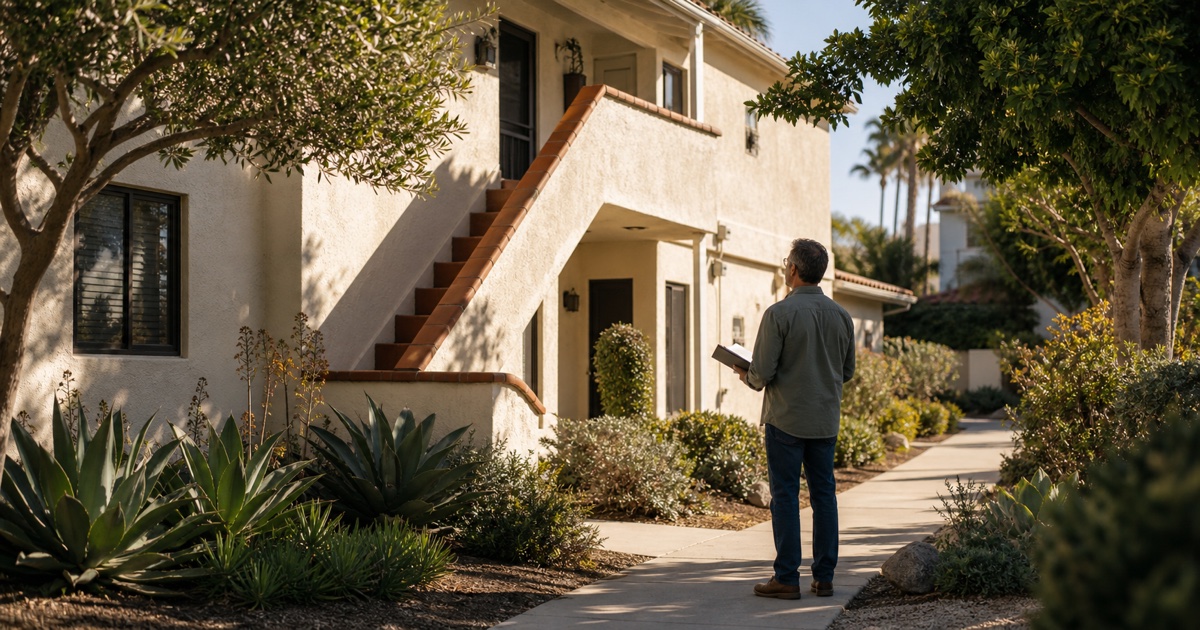
Rental-property risk usually develops through a series of ordinary decisions: which lease to use, what to request from an applicant, how to document a repair, whether to accept a proposed occupant, how to respond to an accommodation request, or whether a planned change is permitted. Ongoing counsel gives an owner a place to test those decisions before they become part of a difficult record.
Law Laguna provides preventive, business-minded counseling for California rental-property owners, housing providers, and property managers. The objective is to identify the controlling state and local rules, organize the relevant facts, and produce a practical next step that the owner’s team can implement.
Who this service is for
Ongoing landlord counsel may fit:
- Individual owners with one or several California rental properties.
- Family trusts and family-owned property entities.
- Owners of small and mid-sized multifamily portfolios.
- Owners of high-value, coastal, or furnished residences.
- Property managers who need an escalation path for nonroutine issues.
- Investors acquiring, renovating, repositioning, or selling tenant-occupied property.
- Out-of-state owners who need California-specific review.
The engagement can be recurring or limited to a defined compliance project. The right structure depends on the portfolio, management team, volume of questions, and urgency.
When owners call
Owners often seek preventive review when:
- A lease or addendum has not been updated for the property’s current use.
- A manager encounters an unusual applicant, occupant, payment, repair, or access issue.
- A tenant asks for an accommodation, modification, additional occupant, animal, or early release.
- The owner is considering a rent increase, renewal, change in terms, or termination.
- A city or county has adopted a registration, notice, relocation, buyout, or inspection rule.
- A repair dispute is becoming more formal or communications are deteriorating.
- The owner plans to sell, refinance, remodel, convert, or move into a tenant-occupied property.
- Different managers are handling similar issues inconsistently.
- A demand letter, agency inquiry, or threatened claim arrives.
The goal is to solve the problem without creating a second one. A quick answer may be useful, but a reliable answer begins with the property, tenancy, documents, timing, and local jurisdiction.
What can change the answer
Property and ownership
The number and type of units, construction history, ownership entity, owner occupancy, subsidy restrictions, deed restrictions, and property location can change which rules apply. Some statutory exemptions also depend on the owner’s identity and whether required exemption language was delivered.
Tenancy history
The start date, current term, occupants, renewals, amendments, rent history, deposit, prior notices, and course of dealing matter. An owner should not assume that the latest form tells the whole story.
State and local law
California’s statewide rent-cap and just-cause statutes are only one layer. A city or county may impose additional rules. The first step in a local-law analysis is confirming the property’s actual jurisdiction—not relying only on a mailing address or neighborhood name.
Documents and conduct
The lease, disclosures, addenda, ledger, inspection records, photographs, repair invoices, communications, accommodation materials, and manager notes may affect both the available options and the quality of the owner’s position.
The owner’s actual objective
Collecting rent, correcting conduct, gaining access, completing repairs, preserving a sale, recovering possession, or ending a dispute are different objectives. The legal strategy should serve the business objective rather than treat every issue as an eviction problem.

How Law Laguna can help you move forward
Law Laguna can provide:
- Lease, addendum, disclosure, and policy review.
- Tenant-screening and application workflow review.
- Security-deposit, rent-payment, fee, and documentation guidance.
- Entry, inspection, repair, habitability, and relocation analysis.
- Review of occupancy changes, subletting, pets, and accommodation requests.
- State rent-cap, just-cause, and exemption analysis.
- Local-law issue spotting and targeted ordinance research.
- Pre-notice review of facts, documents, and proposed communications.
- Demand-letter, negotiation, and settlement assessment.
- Portfolio checklists, escalation rules, and recurring compliance calendars.
- Coordination with property managers, brokers, vendors, accountants, insurance professionals, and specialist counsel when needed.
California law requires attention to operational details. For example, Civil Code section 1962 addresses owner and manager identification, rent-payment information, and delivery of the rental agreement. Civil Code section 1954 limits the purposes, timing, and manner of landlord entry. Civil Code section 1950.5 governs residential security deposits and now includes detailed photographic documentation requirements.
These are examples, not a complete compliance list. A statewide rule may be only the first layer.
The work product
A defined counseling project may produce:
- A written issue assessment identifying assumptions and open questions.
- A redlined lease or addendum with owner-facing comments.
- A disclosure and document matrix for a property or tenancy.
- A screening, accommodation, repair, or escalation workflow.
- A chronology and evidence checklist for a developing tenant problem.
- A local-law applicability memorandum.
- A draft owner or manager communication.
- A pre-litigation options memorandum.
- A prioritized compliance plan for a property or portfolio.
The engagement should state what will be reviewed, what will be delivered, what remains outside scope, and what decision the work is meant to support.
A practical engagement process
1. Confirm the client and scope
The owner, ownership entity, and property manager may have different roles. The engagement identifies the client, decision-maker, properties, and permitted communications.
2. Build the core file
Law Laguna can request the documents needed for the decision, such as the operative lease and addenda, ownership information, payment ledger, notices, communications, photographs, inspection reports, vendor records, and known deadlines.
3. Verify jurisdiction and governing rules
The review separates statewide law from city, county, subsidy, property-type, and contract-specific requirements.
4. Deliver an actionable recommendation
The work product identifies the next step, dependencies, risks, and documentation needed. Where the law or facts remain uncertain, the uncertainty is stated rather than hidden.
5. Maintain the system
For recurring engagements, the owner can establish review triggers—for example, before changing a lease form, denying an unusual application, responding to an accommodation request, serving a termination notice, or adopting a new portfolio policy.

When litigation or another specialist may be needed
Law Laguna’s preferred work includes counseling, documents, compliance, negotiation, pre-litigation assessment, and referral coordination.
Law Laguna can assess the tenancy, documents, local requirements, available options, and pre-litigation strategy. If a filed court action becomes necessary, the firm can help prepare an organized transition to appropriate litigation counsel.
Tax, bankruptcy, land-use, insurance-coverage, employment, or subsidized-housing issues may also require coordinated advice from another professional. Identifying that need early is part of sound preventive counseling.
Related owner services and guides
- For California Property Owners — the owner-service overview.
- Residential Lease Drafting and Review — property-specific tenancy documents.
- Tenant Screening, Applications, and Screening Fees — a consistent applicant workflow.
- Security Deposits for California Landlords — collection, evidence, deductions, and return.
- Rental Property Compliance and Risk Management — repairs, safety, and recurring operations.
- Local Landlord Law Center — Orange, Los Angeles, and San Diego County pathways.
Questions property owners often ask
Is ongoing counsel only for large portfolios?
No. A single-property owner may benefit from a defined lease review, compliance assessment, or decision memorandum. A recurring arrangement is more likely to fit an owner or manager who regularly encounters nonroutine questions.
Can Law Laguna replace my property manager?
No. Legal counsel and property management serve different functions. Law Laguna can advise the owner, review legal and compliance questions, and help define when management should escalate an issue. The property manager remains responsible for the operational work assigned under the management agreement.
Can a property manager be the client?
Sometimes, but the client and authority must be clear. An owner may retain Law Laguna and authorize communications with the manager, or a management company may seek advice about its own obligations. Conflict and scope review comes first.
What should an owner gather for the first review?
Start with the property address, ownership entity, current lease and addenda, payment ledger, notices, relevant communications, photographs, inspection or repair records, management agreement, and known deadlines. Do not send confidential materials until Law Laguna has completed the initial conflict and scope review.
Does preventive counsel include eviction notices?
It may include review of the tenancy, grounds, local prerequisites, evidence, and proposed notice strategy. Because notice requirements are exact and fact-dependent, owners should have the file reviewed before service. If a filed action becomes necessary, Law Laguna can help organize a transition to litigation counsel.
Can one California policy be used for every property?
Not safely in every situation. State law may provide a baseline, but local ordinances, subsidy rules, property type, ownership, and tenancy history can require different documents or procedures.
How often should an owner update a lease and compliance system?
Review should occur when law changes, when the property or ownership changes, before a new leasing cycle, and after a recurring operational problem reveals a weakness. A scheduled annual review is useful, but volatile state and local rules may require more frequent attention.
Official legal sources
The principal statewide starting points for this service include:
- Civil Code section 1962, concerning owner/manager and rent-payment information.
- Civil Code section 1950.5, concerning residential security deposits.
- Civil Code section 1954, concerning landlord entry.
- Civil Code sections 1946.2 and 1947.12, concerning statewide just cause and rent limits.
- Government Code section 12955, concerning California housing discrimination.
This list is not exhaustive. Property-specific and local-law research may be required.
Laws and local procedures change. This page is general information, not legal advice.
Put a review point before the next difficult decision
If a lease, applicant, tenant request, repair, local rule, proposed notice, or portfolio policy needs review, Law Laguna can define the issue and deliver a practical work product.