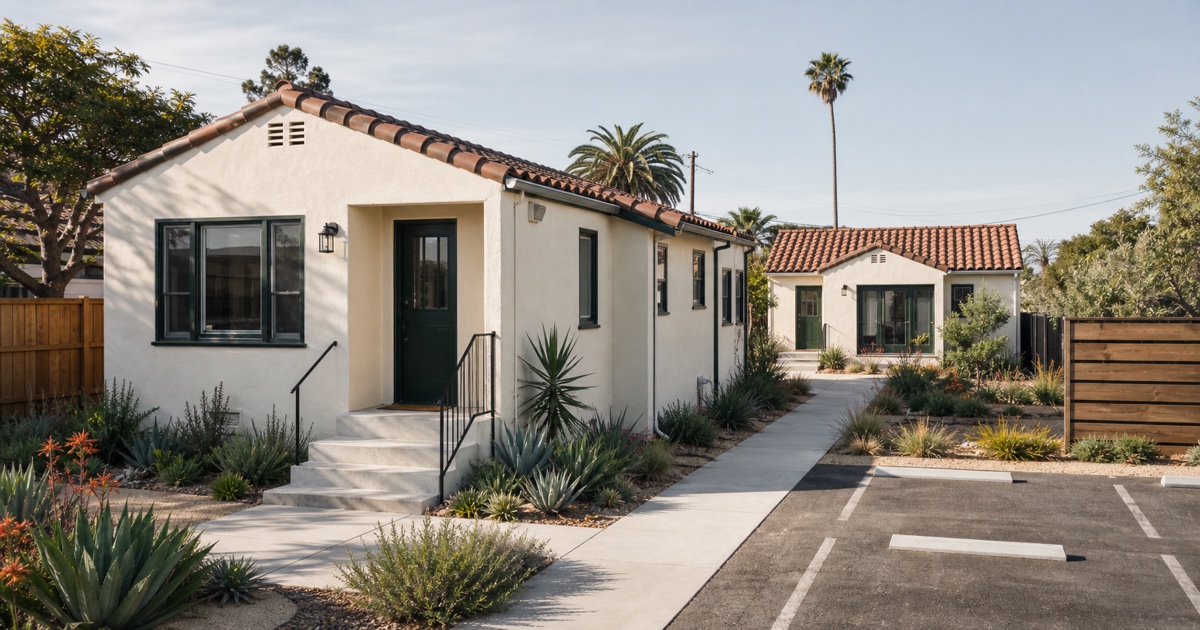
A lease is more than a form used to establish rent and a term. It is the operating document for access, repairs, payments, occupancy, utilities, furnishings, communication, insurance, and enforcement. A generic form may omit a required notice, include a provision California law will not enforce, or conflict with the owner’s real practices.
Law Laguna can draft, review, or repair residential tenancy documents for California owners. The work begins with the property and proposed tenancy—not with copying a form library.
Who this service is for
Lease drafting or review may be useful for:
- An owner preparing to offer a unit for rent.
- An owner replacing an outdated or mismatched agreement.
- A buyer taking over a tenant-occupied property.
- A property manager standardizing documents with owner approval.
- An owner of a furnished, high-value, coastal, or unusual residence.
- An owner adding an accessory dwelling unit or changing the property’s use.
- An owner whose current lease does not match payment, parking, utility, pet, occupancy, or access practices.
- An owner preparing a renewal or amendment after a change in law.
The review can address one tenancy, a property-level document set, or a portfolio template with property-specific schedules.
When owners call
Owners often request a lease review when:
- A broker or manager supplied a form but cannot explain how it applies.
- The property is subject to statewide or local rent and just-cause rules.
- The owner wants clearer occupancy, guest, subletting, parking, storage, or pet terms.
- Utilities, common areas, furnishings, appliances, or services need precise allocation.
- The owner has changed management, payment platforms, or communication methods.
- A term from an older lease has caused repeated disputes.
- The agreement was negotiated in a language other than English.
- The owner wants to know whether a proposed waiver, fee, penalty, or house rule is enforceable.
- A new statute requires updated language, notice, or documentation.
What can change the lease analysis
The property
Unit count, age, location, ownership, owner occupancy, accessory dwelling units, furnishings, parking, shared utilities, building systems, amenities, and subsidy restrictions can all affect the document set.
The parties and management structure
The agreement should identify the correct owner or authorized representative, management contact, service address, rent recipient, payment methods, and authority. Civil Code section 1962 requires specified owner, manager, service, and rent-payment information and generally requires a copy of the executed agreement to be provided within 15 days.
The term and regulatory status
A fixed term does not eliminate rent-cap, just-cause, renewal, notice, or local-law questions. Coverage and exemption analysis under Civil Code sections 1946.2 and 1947.12 can affect required language and future options.
How the agreement was negotiated
Under Civil Code section 1632, a person engaged in business who negotiates primarily in Spanish, Chinese, Tagalog, Vietnamese, or Korean must provide a translation before execution for specified agreements, including a residential lease longer than one month. The facts of the negotiation matter.
Local rules
A city or county may require additional language, registration, postings, relocation provisions, buyout disclosures, or notices. The property’s actual jurisdiction should be verified before finalizing the packet.
What a California lease review should address
Parties, premises, term, and possession
The document should correctly identify the contracting parties, unit, included areas, parking or storage, authorized occupants, start date, term, possession conditions, and key-delivery process.
Rent and payment administration
Rent amount, due date, permitted payment forms, delivery instructions, partial payments, third-party payments, returned payments, and any proposed charges should align with California law and actual operations. Civil Code section 1947.3 generally requires at least one payment method that is neither cash nor electronic funds transfer and contains specific rules for cash demands and third-party payments.
Security deposit and condition evidence
The lease should identify the security accurately and avoid calling it nonrefundable. Civil Code section 1950.5 governs the amount, permitted uses, initial inspection, photographic evidence, itemization, and return of residential security.
Occupancy, guests, subletting, and use
Occupancy provisions should be clear enough to administer and consistent enough to enforce. They should also leave room for fair-housing accommodations, protected conduct, and other statutory rights.
Repairs, access, and communications
The agreement can establish repair-reporting channels and emergency contacts, but it cannot erase statutory obligations. California restricts advance waivers of specified tenant rights. Civil Code section 1953 makes certain waivers void, including waivers of rights under the security-deposit and entry statutes.
Appliances and services
The agreement should state what the owner supplies, who maintains it, and how service interruptions will be handled. For leases entered, amended, or extended on or after January 1, 2026, Civil Code section 1941.1 includes refrigerator requirements and a specific pathway when a tenant asks to provide the tenant’s own refrigerator. That provision requires property- and document-specific review.
Smoking, pets, and property rules
If an owner prohibits smoking on part of the property, Civil Code section 1947.5 requires qualifying new agreements to specify the prohibited areas. Ordinary pet rules should be kept distinct from the individualized analysis required for an assistance-animal request.
Disclosures and addenda
The lease packet may require statewide, federal, local, property-specific, or condition-triggered disclosures. The document set should be assembled through a disclosure matrix rather than by attaching every form in a folder.
How Law Laguna can help you move forward
Law Laguna can:
- Interview the owner about the property and operating plan.
- Review the proposed agreement, prior agreement, or manager-supplied form.
- Identify clauses that conflict with current law or actual practice.
- Draft or revise property-specific terms.
- Create a disclosure and addendum checklist.
- Review payment, deposit, access, repair, occupancy, pet, parking, utility, furnishing, insurance, and communication provisions.
- Flag state and local rent-control or just-cause issues.
- Identify provisions that require tax, insurance, fair-housing, land-use, or other specialist review.
- Explain the completed document set to the owner or authorized manager.
Law Laguna does not republish or provide a public library of proprietary association or legal-research forms. The work product is prepared for the specific engagement.
The work product
Depending on scope, the owner may receive:
- A clean lease ready for owner implementation after final factual confirmation.
- A redline showing proposed changes.
- An owner-facing issue memorandum explaining material choices.
- A property information schedule.
- A required-disclosure and addendum matrix.
- A signing and delivery checklist.
- A renewal or amendment plan.
- A short manager guide identifying provisions that require legal escalation.
An effective deliverable separates fixed legal requirements from business choices. It also identifies blanks and assumptions that must be confirmed before signature.
The engagement process
1. Property and tenancy intake
The owner provides the property address, ownership, unit type, proposed occupants, term, rent, deposit, services, utilities, parking, furnishings, management structure, and known local restrictions.
2. Existing-document review
Law Laguna reviews the proposed form, prior agreement, management documents, and available disclosures. A prior lease may reveal rights or practices that cannot simply be overwritten.
3. Legal and local overlay check
The review checks current California requirements and identifies whether city, county, subsidy, coastal, short-term-rental, or other property-specific rules require separate analysis.
4. Draft and decision call
The owner receives a draft or redline plus focused questions. Business choices—such as included services, parking, furnishing use, or insurance requirements—are resolved deliberately.
5. Final implementation packet
After owner approval and factual confirmation, the document set can be organized for signature, delivery, and record retention. The owner or manager remains responsible for completing blanks accurately and following the agreed procedure.
Enforcement and specialist handoff
A well-drafted lease does not guarantee that every dispute will be simple. It can, however, make obligations clearer and preserve better evidence.
Law Laguna can assess the tenancy, documents, local requirements, available options, and pre-litigation strategy. If a filed court action becomes necessary, the firm can help prepare an organized transition to appropriate litigation counsel.
Lease terms involving subsidized housing, tax allocation, bankruptcy, complex trusts, employee housing, or land-use restrictions may require coordinated specialist advice.
Related services and guides
- Legal services for California rental-property owners
- Ongoing Landlord Counseling and Compliance
- Required Rental Disclosures and Addenda
- Rent Payments, Late Fees, and Other Charges
- Security Deposits for California Landlords
- Move-In and Move-Out Property Documentation
- High-Value and Furnished Residential Leasing
- Local Landlord Law Center
Questions property owners often ask
Can Law Laguna review a lease supplied by a broker or property manager?
Yes. The review can identify property-specific gaps, inconsistencies, outdated clauses, and legal issues. The document’s source does not establish that it fits the property or the current law.
Is one lease form appropriate for an entire portfolio?
A common core may be useful, but unit type, city, ownership, services, furnishings, subsidy status, and local law may require separate schedules or addenda. Portfolio standardization should preserve those distinctions.
Can a lease waive California entry or security-deposit rules?
Certain waivers are void. Civil Code section 1953 expressly addresses waivers of rights under sections 1950.5 and 1954. A lease review should remove language that creates false expectations or conflicts with mandatory law.
Does a fixed-term lease avoid just-cause or rent-cap law?
Not necessarily. Property coverage, tenancy duration, exemption status, required notices, local law, and the action the owner plans to take all matter. The lease term is only one part of the analysis.
When is a translated lease required?
Civil Code section 1632 applies to specified agreements when a person engaged in business negotiates primarily in one of the languages listed in the statute. For residential rental agreements, the duration and negotiation facts matter. Translation should be addressed before execution, not after a dispute.
Should every possible disclosure be attached to every lease?
No. Some disclosures are broadly required; others depend on property age, location, known conditions, ownership, regulatory coverage, or services. A documented disclosure matrix is more reliable than an undifferentiated packet.
Can Law Laguna draft a lease for a furnished or high-value home?
Yes, subject to conflict and scope review. Furnishings, inventories, condition evidence, privacy, services, insurance, maintenance, access, timing, and local use restrictions usually require additional attention.
What should I provide for a lease review?
Provide the property address, ownership and management information, proposed terms, existing or proposed forms, property features, included services, known local requirements, and any prior tenancy documents that may affect the new arrangement. Do not send confidential material until invited after conflict review.
Official legal sources
Key official starting points include Civil Code section 1962, Civil Code section 1953, Civil Code section 1632, Civil Code section 1947.3, Civil Code section 1950.5, and the statewide rent and just-cause provisions in sections 1946.2 and 1947.12.
This is not a complete lease checklist. Local ordinances and property-specific rules must be reviewed separately.
Laws and local procedures change. This page is general information, not legal advice.
Start with the property, not the template
A lease review should leave the owner with a document that can be understood, administered, and supported by a clean signing file.
Official sources used for this page
- leginfo.legislature.ca.gov — source 1
- leginfo.legislature.ca.gov — source 2
- leginfo.legislature.ca.gov — source 3
- leginfo.legislature.ca.gov — source 4
- leginfo.legislature.ca.gov — source 5
- leginfo.legislature.ca.gov — source 6
- leginfo.legislature.ca.gov — source 7
- leginfo.legislature.ca.gov — source 8
- leginfo.legislature.ca.gov — source 9