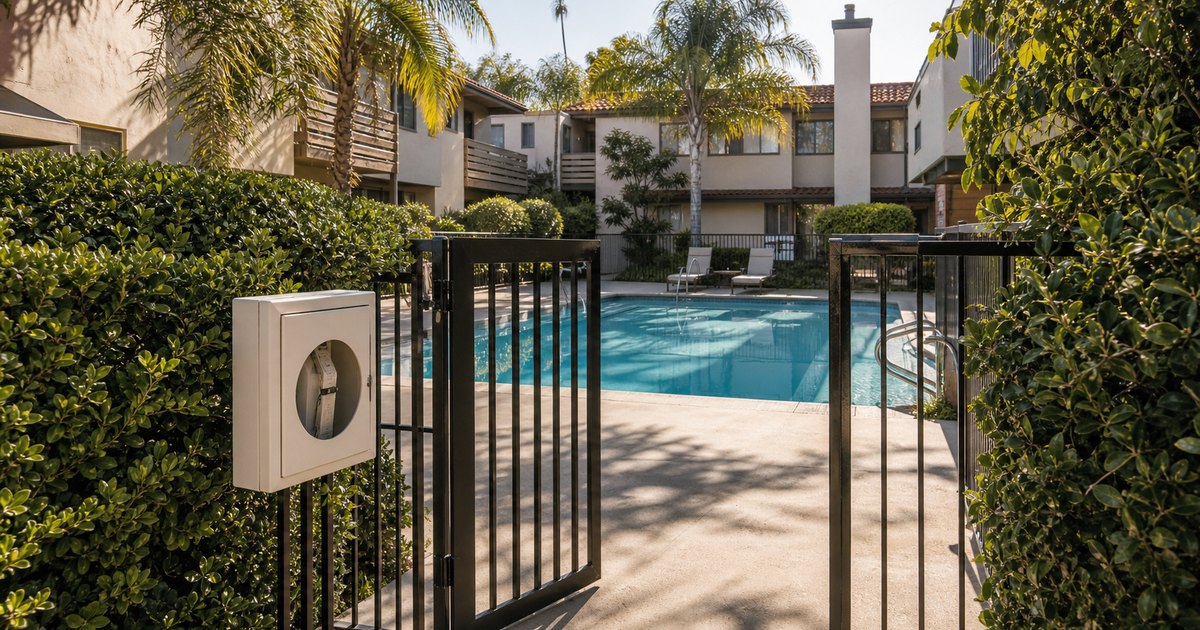
Short answer: California’s ordinary-care rule, housing standards, pool statutes, animal laws, local codes, and property-specific facts can overlap. A dog-bite statute aimed at the dog owner does not automatically decide a landlord’s liability. A single-family pool rule does not describe every apartment-pool obligation. The owner should map who controls each condition, what notice exists, what inspection applies, and how the issue was corrected.
Immediate risk-control checklist
- Walk every common route from sidewalk and parking through doors, stairs, corridors, elevators, amenities, and units.
- Inventory pools, spas, gates, barriers, drains, lighting, lifesaving equipment, signs, and service records.
- Identify every permitted pet, assistance-animal request, animal complaint, bite, attack, escape, or fence concern.
- Test exterior and emergency lighting; inspect floors, stairs, railings, balconies, walkways, gates, doors, and trip transitions.
- Review trees, branches, slopes, drainage, irrigation, retaining walls, roofs, fences, play equipment, laundry rooms, trash areas, and parking.
- Record the date, person, location, condition, photograph, work order, urgency, and closure for every finding.
- Confirm vendor licensing and the local health, building, fire, pool, and animal-control agencies.
- Review liability, property, umbrella, animal, pool, and amenity exclusions with the insurance professional.
- Escalate any known immediate threat and restrict access rather than leaving only a warning sign.
What not to do
- Do not assume “use at your own risk” eliminates maintenance or code duties.
- Do not keep a pool or stair open after a qualified person directs closure.
- Do not repair a self-latching gate so that it can be propped open.
- Do not treat all animals as ordinary pets; assistance-animal rules require a separate analysis.
- Do not state that a breed alone proves legal dangerousness or fair-housing ineligibility.
- Do not erase video, repair tickets, access logs, or resident reports after an incident.
- Do not admit fault or accuse a resident before the facts are preserved.
- Do not rely on a property manager’s memory instead of a recurring inspection record.
- Do not assume an insurer’s renewal means the property meets current law.
Start with control, notice, and the condition
Civil Code section 1714 states California’s general ordinary-care principle for management of property and person. Whether a particular owner owed or breached a duty in an injury matter remains fact-specific.
For prevention and claim review, identify:
- Who owned, possessed, maintained, or could repair the area.
- Whether the lease, HOA documents, management agreement, or vendor contract allocated tasks.
- When the condition began and who received notice.
- Whether a reasonable inspection would have found it.
- Prior complaints, near misses, repairs, or similar incidents.
- Code, permit, manufacturer, and professional requirements.
- Tenant or guest conduct and access rights.
- Whether a warning, closure, repair, or other measure was feasible.
- Causation, injury evidence, and insurance notice.
A contract allocation may help decide reimbursement between responsible parties, but it does not automatically erase duties owed to residents or visitors.
Pool and spa risks
Pool compliance begins by classifying the property and pool. Record:
- Single-family versus multifamily or common-interest setting.
- New construction, remodel, permit, and final-approval dates.
- Barrier, fence, wall, gate, door, cover, and alarm configuration.
- Suction outlets, drains, covers, circulation, electrical and lighting systems.
- Water chemistry, testing, service, and closure records.
- Signs, rules, emergency information, lifesaving equipment, and any lifeguard representation.
- Accessibility and route conditions.
- Local environmental-health permit and inspection history.
Private single-family pools
Health and Safety Code section 115922 applies when a building permit is issued for construction of a new pool or spa, or remodeling an existing one, at a private single-family home. Subject to statutory exceptions, the permitted work must include at least two of seven specified drowning-prevention features, and some combinations do not count as two. The local building official inspects the features before final approval.
Do not convert this permit-triggered statute into a statement that every existing pool retroactively needs two features solely under section 115922. Existing barriers, local ordinances, permit history, ordinary-care duties, insurer requirements, manufacturer directions, and other codes still need review.
Apartment and multifamily pools
California’s public swimming-pool sanitation and safety article requires public pools to be operated and maintained in a sanitary, healthful, and safe manner. Provisions in that framework expressly use apartment-complex and other residential pools in particular definitions. State regulations and local environmental-health agencies add construction, recirculation, water-quality, safety, record, signage, and antientrapment requirements.
Confirm the current Title 22 regulations and local permit conditions for the exact pool. A pool-service invoice does not necessarily prove compliant gates, drain covers, records, signs, electrical protection, or closure response.
A practical pool workflow
Opening or daily-use check
Confirm the gate closes and latches, barriers are intact, water and deck are visible, safety equipment and signs remain present, drains and covers show no obvious defect, and no electrical or contamination concern requires closure.
Vendor and regulatory check
Define who tests water, records results, services equipment, inspects barriers, reports an unsafe condition, and communicates with environmental health. Audit the vendor’s record against the contract and permit.
Incident or defect
Call emergency services where needed, close the pool, preserve video and photographs, record witness and equipment information, notify insurance, and contact the appropriate agency or qualified professional before reopening.
Dogs and other animals
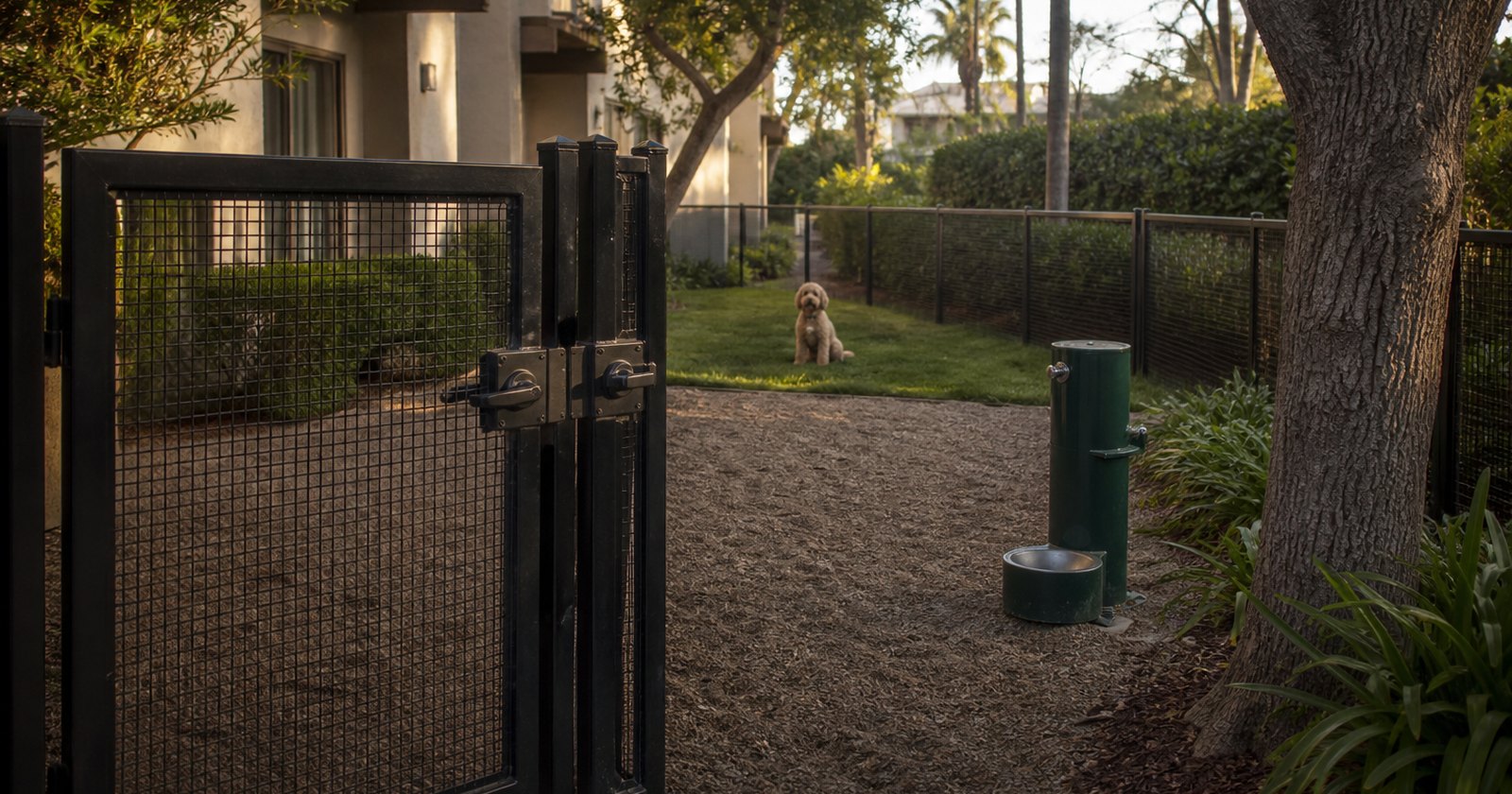
Civil Code section 3342 generally makes a dog owner liable for damages when the dog bites a person in public or lawfully on private property, regardless of prior viciousness or the dog owner’s knowledge, subject to the statute’s terms.
That statute does not automatically impose the same strict liability on a property landlord. A landlord claim can turn on different principles, including actual knowledge of a dangerous condition, control over the property or tenancy, contractual rights, ability to take protective measures, prior incidents, and causation. Do not promise that “one bite” is required, or that ownership of the building alone decides the outcome.
For every animal complaint, preserve:
- Animal and handler identity.
- Lease and animal authorization.
- Assistance-animal status and accommodation file, kept with restricted access.
- Date, location, exact conduct, injury, and witnesses.
- Prior complaints, notices, bites, escapes, or animal-control records.
- Fence, gate, leash, common-area, and access facts.
- Owner or manager response.
Use the pet-policy guide for ordinary animals. If the animal may be disability-related, use the assistance-animal guide before applying pet fees, breed rules, or a no-pet policy. Fair housing does not require an owner to ignore a supported direct threat, but the analysis must be individualized and evidence-based.
Common areas and recurring premises risks
Civil Code section 1941.1 includes sanitary owner-controlled areas and floors, stairways, and railings in good repair among tenantability characteristics. Health and Safety Code section 17920.3 identifies numerous substandard conditions. Local codes add property-maintenance requirements.
Build inspections by risk zone:
Use the annual compliance calendar to assign recurring checks and retain closure evidence.
Walking and access
- Broken or uneven surfaces.
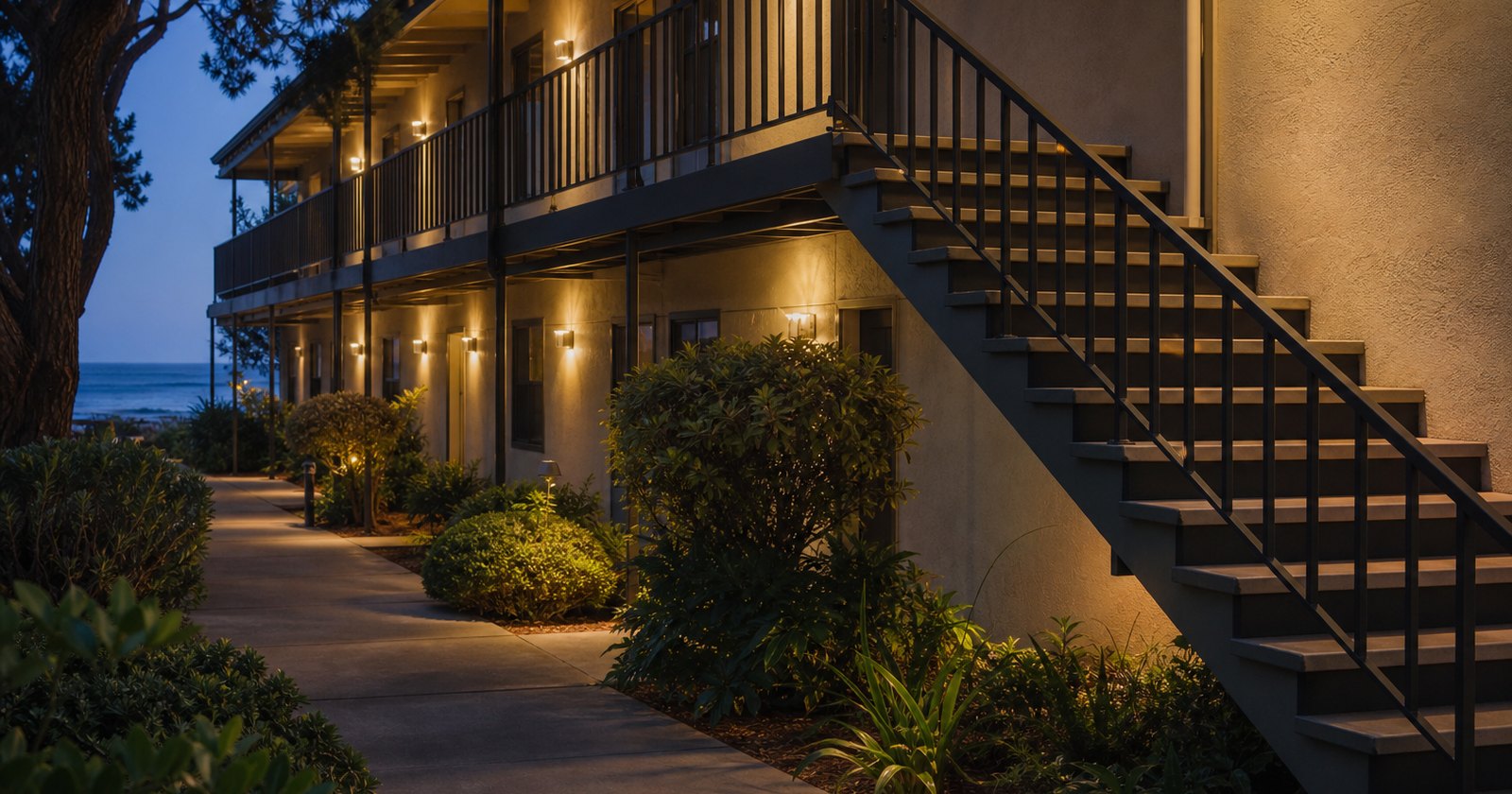
- Stair treads, handrails, guardrails, and landings.
- Water, algae, ice, debris, cords, mats, and poor transitions.
- Exterior, corridor, parking, and emergency lighting.
- Accessible routes, ramps, door clearances, and elevators.
Building and grounds
- Roof and drainage discharge.
- Trees, dead limbs, roots, slopes, and retaining walls.
- Fences, gates, walls, and security hardware.
- Parking stops, vehicle paths, garage doors, and charging equipment.
- Trash, pests, laundry, mail, and storage rooms.
- Playgrounds, gyms, grills, roofs, docks, or other amenities.
Conduct and security
- Repeated unauthorized access.
- Broken locks, doors, gates, or intercoms.
- Known hazards in predictable gathering areas.
- Vendor key and access control.
- Incident and law-enforcement records.
Security duties are fact-specific. Avoid promising residents that the property is “crime-free” or guaranteeing safety. Correct known hardware and lighting issues, coordinate appropriate measures, and communicate accurately.
Incident-response workflow
1. Protect
Contact emergency services, provide reasonable immediate assistance, close or isolate the condition, and avoid further exposure.
2. Preserve
Save video before overwrite, take photographs, identify witnesses, retain failed components, and export work orders, access logs, and communications.
3. Report
Notify insurance promptly and follow policy requirements. Report to public health, animal control, building, fire, or another agency when required.
4. Investigate
Use qualified professionals. Keep factual investigation separate from public blame or unsupported legal conclusions.
5. Correct
Repair, replace, restrict, or redesign as appropriate. Obtain permits and agency approval. Document verification before reopening.
6. Communicate
Provide affected residents a measured operational update. Protect private medical and accommodation information.
7. Review
Update the risk map, lease procedures, vendor scope, inspection frequency, and insurance information.
The Big 3 local overlay
- Orange County and Laguna Beach: Confirm municipal boundaries, county environmental-health pool authority, animal control, building and fire jurisdiction, coastal conditions, hillside drainage, trees, wildfire access, and Laguna Beach vegetation rules. Use the Orange County guide and Laguna Beach guide.
- Los Angeles County: Separate City of Los Angeles, unincorporated county, and another city. Pool permits, animal-control service, LAHD or county housing inspection, local security hardware, and property-maintenance rules differ. Use the Los Angeles County guide and City of Los Angeles guide.
- San Diego County: Confirm the city, county environmental-health pool program, animal-control provider, building and fire agency, and local tenant-protection overlay. Use the San Diego County guide and City of San Diego guide.
Common mistakes
- Inspecting amenities but not the route to them.
- Leaving a known hazard open with only a warning sign.
- Keeping no proof that a gate self-closed and latched.
- Failing to audit pool-service records and permits.
- Treating a dog complaint as either automatically true or irrelevant.
- Applying ordinary pet rules to a possible assistance animal.
- Losing surveillance video through automatic overwrite.
- Repairing before documenting a failed component.
- Failing to notify insurance promptly.
- Ignoring recurring “minor” reports that show a pattern.
Questions property owners often ask
Are apartment pools treated as public pools?
California’s pool statutes and regulations include apartment-complex pools within important public-pool definitions and safety requirements. The exact provisions, Title 22 rules, and local environmental-health permit must be checked for the facility.
Must every single-family rental pool have two barriers?
Section 115922’s two-feature requirement is tied to a permit for new pool or spa construction or remodeling at a private single-family home. Existing pools may have other barrier, code, permit, safety, and local duties. Review the permit history instead of applying one slogan.
Is a pool-service company responsible for all compliance?
Usually not. Its contract may address water or equipment while gates, signs, electrical systems, drains, permits, records, and resident access remain outside scope. The owner should audit the whole system.
Is a landlord strictly liable whenever a tenant’s dog bites?
Civil Code section 3342 addresses liability of the dog owner. A landlord’s separate exposure is fact-specific and can involve knowledge, control, ability to act, and causation. Preserve the full animal history and lease rights.
Can an owner ban a dangerous assistance animal?
Fair housing requires an individualized assessment. Reliable, objective evidence of a direct threat or substantial property-damage risk can matter, as can whether a reasonable measure would reduce it. Do not use breed or generalized fear alone.
How often should common areas be inspected?
No single interval fits every property or condition. Set frequency based on traffic, weather, age, prior reports, manufacturer instructions, vendor visits, local programs, and risk. Inspect promptly after storms, incidents, construction, or a new complaint.
Does a warning sign eliminate liability?
Not necessarily. A sign may communicate a condition but may be insufficient where repair, closure, guarding, or another feasible measure is required. The nature and immediacy of the risk control the response.
What should be preserved after an injury?
Preserve photographs, video, witness details, incident reports, lease and rules, inspection and repair records, failed components, agency records, and insurance notice. Do not alter or discard evidence without advice.
Official sources
See the property-compliance hub.
Put the property risk file in order
Bring the property map, leases, rules, HOA and management agreements, inspection and repair records, pool file, animal history, incident evidence, agency notices, vendor contracts, and insurance information.
Request a Lease or Compliance Review
Law Laguna can assess the tenancy, documents, local requirements, available options, and pre-litigation strategy. If a filed court action becomes necessary, the firm can help prepare an organized transition to appropriate litigation counsel.
Laws and local procedures change. This page is general information, not legal advice.