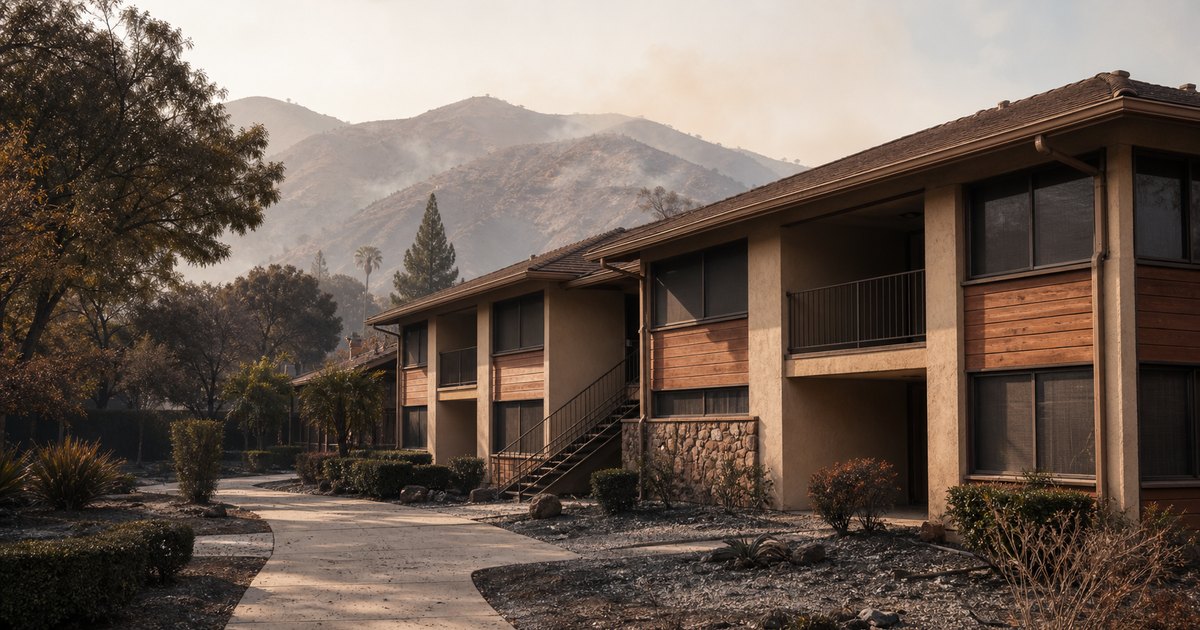
Short answer: California’s SB 610 rules took effect January 1, 2026. For a qualifying disaster declared by the President or Governor, Civil Code section 1941.8 requires necessary disaster-debris removal and hazard mitigation within a reasonable time, government cleaning protocols, licensed remediation where required, written completion notice, access to environmental reports, and the tenant’s return at the pre-disaster rent when the tenancy remains in effect and return is safe and practicable. Section 1941.9 separately addresses rent during mandatory evacuation and return of advance rent after certain disaster-related terminations. These rules do not require an owner to rebuild.
First 24 hours: protect people and freeze the record
- Follow emergency orders. Coordinate property access with official restrictions; do not send anyone into an evacuation or exclusion zone.
- Account for the property. Identify every building, unit, resident contact, reported injury, utility status, access restriction, and known hazard.
- Preserve declarations and orders. Save the actual presidential, gubernatorial, county, city, fire, health, and building documents with their dates and geographic scope.
- Notify emergency services and insurance. Open the correct claim, ask about emergency mitigation and evidence requirements, and record every instruction.
- Stabilize only when lawful and safe. Qualified emergency work may include shutting utilities, stopping water, boarding, shoring, preventing access, or protecting exposed areas.
- Pause ordinary rent decisions. Flag the ledger before posting late fees, serving notices, applying prepaid rent, or announcing a rent increase.
- Communicate and log. Tell residents what order applies, who controls access, and how updates will be sent without guessing at return. Keep one chronology for orders, inspections, vendors, payments, communications, and decisions.
What not to do
- Do not announce that the property is safe because it is still standing.
- Do not permit reentry solely because an evacuation order ended.
- Do not dry-sweep, leaf-blow, pressure-wash, or disturb ash and debris without the applicable protocol.
- Do not send ordinary cleaners into lead, asbestos, smoke, sewage, or chemical hazards beyond their training.
- Do not terminate a tenancy by text or treat displacement as abandonment.
- Do not collect full rent for a mandatory-evacuation period without reviewing section 1941.9.
- Do not promise insurance will pay the tenant or determine the owner’s legal duties.
- Do not advertise replacement housing or raise rent without checking active price-gouging limits.
- Do not discard environmental studies, adjuster records, debris samples, or before-and-after evidence.
Confirm whether the 2026 disaster statute applies
Civil Code section 1941.8 defines “disaster” for this framework as a natural or human-caused emergency—such as earthquake, flood, fire, riot, storm, drought, infestation, or disease outbreak—for which the President of the United States or California Governor declared a state of emergency.
A local declaration alone can activate other laws, including Penal Code section 396, but it does not automatically satisfy section 1941.8’s stated declaration definition. Save the declaration itself. Confirm the incident, date, geography, extensions, amendments, and property address rather than relying on a news headline.
The Cal OES emergency-proclamation archive is a starting point. County and city orders, public-health instructions, utility restrictions, and federal declarations may add separate layers.
Debris removal and hazard mitigation
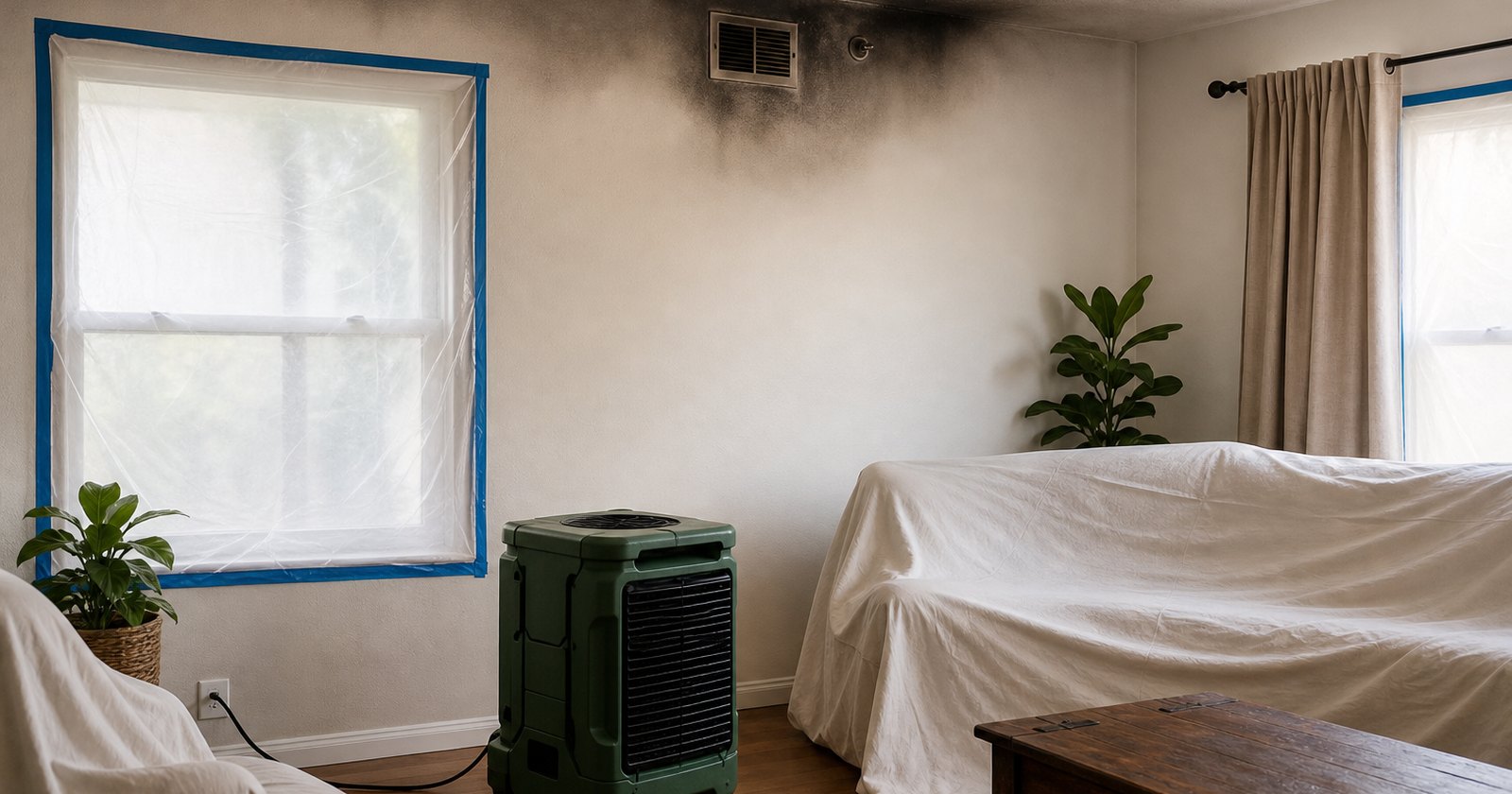
Section 1941.8 requires the landlord, within a reasonable time after disaster damage, to take one or both actions as necessary:
- Remove debris caused by the disaster.
- Mitigate hazards arising from it, including mold, smoke, smoke residue or odor, ash, asbestos, and water damage.
The owner must follow government cleaning protocols and use licensed remediation where required. The team may include building officials, an environmental professional, engineer, certified firm, restoration contractor, utility, and insurer.
Until a local public-health agency or official determines that disaster debris—including ash, sludge, or runoff—does not contain toxic substances, the presence of that debris at the rental unit is presumed under the statute to render the unit untenantable. An ended evacuation order is therefore not the same as environmental clearance or building approval.
Use the environmental-condition guide for lead, asbestos, mold, smoke, pesticides, and specialized vendor controls.
Completion notice and environmental reports
If the tenant supplied a postal or email address, section 1941.8 requires written notice that the landlord has completed the required debris removal or hazard mitigation. The notice must also tell the tenant that the tenant may view and, on request, obtain copies of environmental studies, testing, or reports conducted.
Create a deliberate completion package:
- Property and unit.
- Disaster and declaration.
- Work completed and dates.
- Qualified vendors and permits.
- Government protocols followed.
- Agency inspection or clearance.
- Environmental study, test, or report index.
- Known limits or pending work.
- Safe-return and access information.
- Contact and report-request method.
Do not describe a report as “clearance” if its author or scope does not say that.
Rent during a mandatory evacuation
SB 610 added Civil Code section 1941.9. During a period when a tenant cannot occupy the residential unit because of a mandatory evacuation order arising from a section 1941.8 disaster, the tenant’s rent obligation is discharged for that period.
If rent was already paid for the evacuation period, the statute requires the owner to return that amount within 10 calendar days after the evacuation order is lifted, or the tenant may deduct it from the next month’s rent.
The ledger calculation requires exact times and dates:
- Obtain the mandatory order and any zone map.
- Confirm when it became effective for the property.
- Confirm when it was lifted or modified.
- Determine the daily rent method under the lease and applicable law.
- Separate the evacuation period from later untenantability or voluntary displacement.
- Record refund, credit, or tenant deduction.
- Check local rent, subsidy, and emergency rules before communicating the result.
The evacuation-rent rule does not necessarily answer a later period of restricted access or remediation. Habitability, the lease, local law, and other doctrines may control.
Destruction, tenancy termination, and advance rent
When a residential hiring terminates under the specific destruction-related provisions identified in section 1941.9, the owner must return advance rental payments covering the period after termination within 21 days after the termination date. The statutory termination date depends on which referenced Civil Code provision applies.
That does not authorize a unilateral label of “destroyed.” Before treating the tenancy as ended, obtain the building facts, lease, tenant communication, repair or demolition decision, insurance position, government orders, and applicable termination law. Security-deposit accounting is a separate process and should be calendared independently.
The right to return—and the no-rebuild rule
Unless lawfully terminated by either party, section 1941.8 says the tenancy remains in effect and the tenant has the right to return:
- At the same rental rate in effect immediately before the disaster.
- As soon as return is safe and practicable.
The statute also says it does not require the owner to rebuild a residential rental property or a portion damaged by a disaster. These points must be read together. A decision not to rebuild does not eliminate the need to lawfully address the tenancy, rent, deposits, notices, local just-cause or demolition rules, insurance communications, and tenant belongings.
Give milestone updates without promising a return date that depends on utilities, permits, remediation, or agency approval.
Emergency price gouging and rent decisions
Penal Code section 396 can restrict rent advertised, offered, or charged to existing or prospective tenants after a presidential, gubernatorial, or local emergency declaration. Its housing provision generally uses a 10-percent ceiling during the operative period, with detailed definitions, exceptions, baseline calculations, and extension rules. Local rent control can be more restrictive.
The section also restricts evicting a resident during the operative period and rerenting at a price above the permitted amount, subject to its terms. Repair and reconstruction pricing can follow a different emergency period.
Declarations and extensions change. Perform a same-day check of the statute, Attorney General guidance, state and local orders, and the property’s baseline before any increase, new listing, furnished conversion, fee change, or termination-and-rerental decision. Use the emergency price-gouging guide for the detailed calculation.

A post-disaster decision workflow
1. Classify the legal periods
Track evacuation, exclusion, utility shutoff, inspection, remediation, untenantability, safe return, and any lawful termination separately. One event can have several different legal periods.
2. Build the authority folder
Save declarations, maps, orders, protocols, permit instructions, health guidance, utility notices, and extensions. Add the property address and source date to every record.
3. Assess before cleaning
Document conditions and obtain qualified scope. For pre-1978 housing, consult EPA’s post-disaster lead-renovation guidance; emergency provisions are limited, and ordinary RRP requirements resume after the immediate emergency work.
4. Coordinate the tenancy and ledger
Decide occupancy, temporary lodging, rent treatment, access, belongings, accommodation, and return without waiting for the construction file to finish.
5. Remediate and verify
Use applicable protocols, licensed vendors, permits, testing, agency approvals, and a written closeout. Notify the insurer of scope changes.
6. Communicate return or lawful termination
If the tenancy continues, provide the required completion and report-access notice and a documented safe-return plan. If termination is contemplated, review all state and local grounds and procedures first.
7. Preserve and review
Maintain the complete disaster file for claims, tenant questions, future disclosures, sale due diligence, tax records, and the next emergency plan.
The Big 3 local overlay
- Orange County and Laguna Beach: Confirm evacuation zone, city or county jurisdiction, fire and building access, debris protocols, coastal permits, defensible-space rules, and any local emergency extension. Use the Orange County guide and Laguna Beach guide.
- Los Angeles County: Distinguish City of Los Angeles, unincorporated county, and other incorporated cities. LAHD or county rent, relocation, inspection, debris, and emergency orders can operate alongside state law. Use the Los Angeles County guide and City of Los Angeles guide.
- San Diego County: Confirm city limits, county public-health and debris direction, fire authority, and City of San Diego or other local tenant protections. Use the San Diego County guide and City of San Diego guide.
Common mistakes
- Treating the evacuation end date as a safe-return certification.
- Using one rent credit for several legally different periods without explanation.
- Losing the operative declaration or zone map.
- Cleaning before environmental and insurance documentation.
- Hiring unqualified disaster vendors under time pressure.
- Failing to give the completion and report-access notice.
- Raising rent based on insurance or furnishing without checking Penal Code section 396.
- Treating displacement as abandonment.
- Ignoring disability, language-access, pets, medication, or mobility needs in the return plan.
- Announcing permanent termination before deciding whether to rebuild.
Questions property owners often ask
Does SB 610 apply to every apartment fire or leak?
Not automatically. Section 1941.8 uses a disaster definition requiring a presidential or gubernatorial emergency declaration. Ordinary habitability, repair, insurance, and local laws still apply to an event outside that definition.
Is rent owed during a mandatory evacuation?
For a qualifying section 1941.8 disaster, section 1941.9 discharges the rent obligation during the period the tenant cannot occupy because of the mandatory order. Prepaid rent for that period must be returned within 10 calendar days after the order is lifted or may be deducted as the statute permits.
Can tenants return when the evacuation order is lifted?
Not necessarily. Access can still depend on building, fire, utility, environmental, or public-health approval. Section 1941.8 also creates a presumption tied to disaster debris until the specified local public-health determination.
Must an owner rebuild a destroyed rental?
Section 1941.8 expressly says no rebuild is required. The owner must still lawfully resolve the tenancy, rent, advance payments, security deposit, notices, local protections, and belongings.
At what rent does a returning tenant come back?
If the tenancy was not lawfully terminated, the statute provides return at the same rental rate in effect immediately before the disaster when safe and practicable. Other lawful future rent rules remain subject to state, local, and emergency limits.
Must the owner give tenants environmental reports?
If the tenant provided a postal or email address, the completion notice must state that the tenant may view and, if requested, obtain copies of environmental studies, testing, or reports conducted.
Does the 10-percent emergency rule allow every 10-percent increase?
No. Penal Code section 396 has detailed baselines, housing definitions, exceptions, operative periods, and extensions, and local rent law may allow less. Verify the same day before changing or advertising rent.
Official sources
See the property-compliance hub.
Review the disaster timeline before making the next tenancy decision
Bring the declarations and orders, property address, lease, rent ledger, tenant communications, photographs, agency and environmental reports, vendor scopes, insurance correspondence, and proposed return or termination plan.
Review the Tenant File and Next Step
Law Laguna can assess the tenancy, documents, local requirements, available options, and pre-litigation strategy. If a filed court action becomes necessary, the firm can help prepare an organized transition to appropriate litigation counsel.
Laws and local procedures change. This page is general information, not legal advice.
Verify the current declaration, rate, fee, form, or agency instruction before acting.