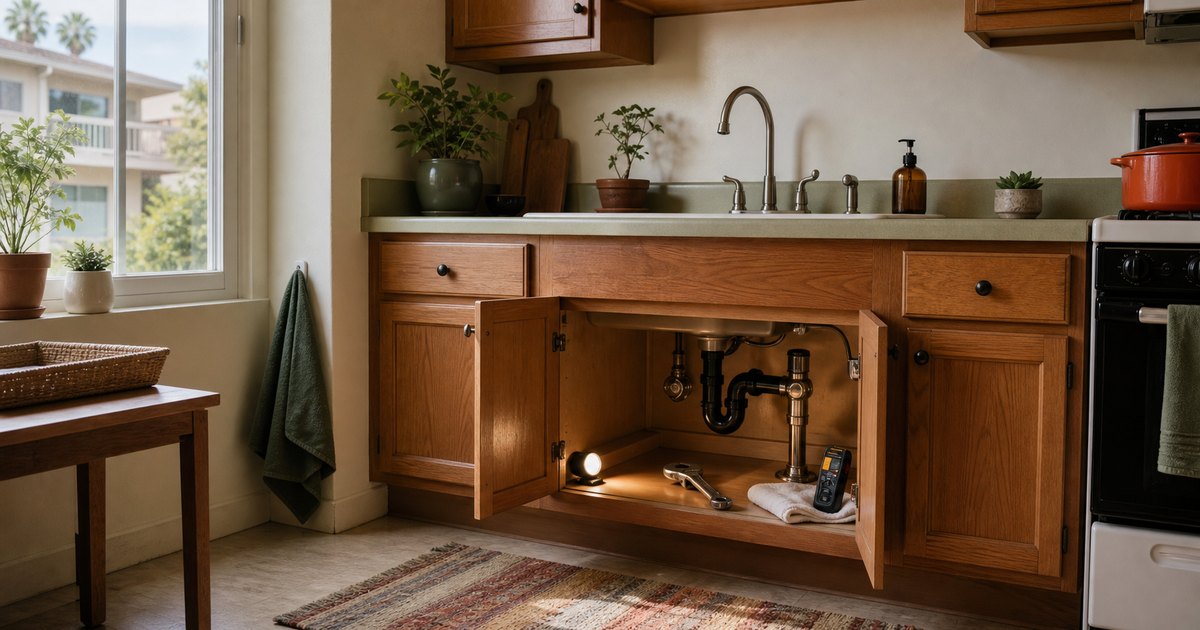
Short answer: California owners should triage every reported condition, arrange lawful access, use qualified help, communicate a realistic plan, and verify completion. Whether a tenant must leave—and who must pay—depends on the condition, the work, a government order, the lease, fair-housing needs, and state or local relocation rules. There is no single statewide rule requiring a hotel for every repair.
What to do first
- Preserve the report. Save the original message, portal entry, photographs, date, time, and person who received it.
- Screen for urgency. Active fire, gas odor, flooding near electricity, structural movement, sewage release, loss of essential services, or another immediate danger calls for emergency services and qualified professionals—not an ordinary work order.
- Acknowledge without diagnosing. Confirm receipt, state the next operational step, and avoid unsupported conclusions about safety, causation, or tenant responsibility.
- Arrange lawful access. Identify whether the circumstances support emergency entry or require notice and scheduling under Civil Code section 1954.
- Send the right person. A handyman, plumber, electrician, industrial hygienist, engineer, or public agency may answer different questions. Confirm licensing where required.
- Decide whether occupancy can continue. Consider the affected rooms, duration, noise, dust, utilities, containment, safe egress, medical or disability needs, and vendor instructions.
- Communicate and follow up. Give the tenant a contact, expected schedule, access plan, interim precautions, and a way to report a change.
- Verify closure. Retain invoices, permits, before-and-after photographs, testing or clearance records, and the tenant-facing completion message.
What not to do
- Do not delay a legitimate repair because rent is unpaid or another dispute is pending.
- Do not threaten entry, shut off services, remove doors, or use another self-help tactic.
- Do not promise that a unit is safe based only on appearance.
- Do not admit a legal conclusion before the facts are investigated.
- Do not characterize every inconvenience as “uninhabitable,” or dismiss a serious condition as cosmetic.
- Do not assume a lease clause shifts every repair or relocation duty to the tenant.
- Do not serve a rent or termination notice without checking retaliation, habitability, and local-law exposure.
- Do not close a work order merely because a vendor sent an invoice.
The documents that drive the analysis
A clean review file should include:
- The lease, amendments, addenda, and house rules.
- Move-in condition evidence and prior repair history.
- The tenant’s complete report and follow-up communications.
- Photographs, video, moisture readings, and inspection reports.
- Entry notices, scheduling attempts, and access refusals.
- Vendor scopes, licenses, bids, invoices, and completion records.
- Building permits, code notices, inspection results, and orders.
- The property’s unit count, age, address, and actual jurisdiction.
- Insurance policies, claim correspondence, and coverage reservations.
- Rent-control, registration, subsidized-housing, or HOA records.
- Any disability-accommodation request or health-related limitation actually communicated to management.
The issue is often not whether a repair occurred, but whether the owner can show a timely, appropriate process from first report through verified completion.

California’s statewide habitability framework
Civil Code section 1941 requires a residential lessor to put the premises into a condition fit for human occupation and repair later dilapidations that render it untenantable, subject to statutory limits. Section 1941.1 identifies core characteristics, including effective weather protection, working plumbing and gas, hot and cold water and sewage, heat, electrical facilities, sanitary owner-controlled areas, trash receptacles, and floors, stairs, and railings in good repair.
Health and Safety Code section 17920.3 separately identifies many conditions that may make a building or portion substandard. Local building, housing, health, and fire officials can investigate and issue notices or orders.
For leases entered into, amended, or extended on or after January 1, 2026, section 1941.1 also adds qualifying stove and refrigerator requirements, with stated exceptions and a specific tenant-provided-refrigerator option. Those rules are addressed in the fire-safety and appliance guide.
Tenant conduct can matter, but it is not a shortcut
Civil Code section 1941.2 can limit duties under sections 1941 and 1942 when a tenant’s substantial statutory violation contributed substantially to the condition or interfered substantially with the owner’s duty. The facts and causal link matter. An owner should still address urgent safety conditions and preserve evidence rather than rely on a conclusory accusation.
Delay can create remedies and enforcement risk
Civil Code section 1942 describes tenant remedies under stated conditions after notice and an owner’s neglect to repair within a reasonable time. Other provisions can affect rent collection when serious cited conditions remain unabated, and section 1942.5 creates retaliation risk in protected circumstances. A code complaint does not erase every owner right, but it changes the risk analysis.
Does the tenant need to leave during the work?
Use a fact-based occupancy decision:
| Situation | Owner’s next question |
|---|---|
| A room is affected but essential services, egress, and safe separation remain | Can qualified work proceed safely with a written schedule and controls? |
| The only bathroom, kitchen, heat, water, electricity, or safe exit will be unavailable | Is temporary lodging, rent treatment, or a work sequence required by law, lease, local rule, or practical safety? |
| Dust, lead, asbestos, mold, sewage, smoke, or chemicals may spread | What containment, testing, remediation, clearance, and exclusion instructions apply? |
| An agency issues an order to vacate | What does the order require, which relocation program controls, and what are the appeal and payment deadlines? |
| A tenant identifies a disability-related need | Does the repair or lodging plan require an individualized fair-housing process? |
| The work is a planned substantial remodel tied to termination | Is this actually a no-fault termination subject to state or local just-cause and relocation rules, rather than temporary maintenance? |
Temporary relocation during an ongoing tenancy is different from permanently ending a tenancy. A hotel arrangement, rent credit, temporary unit, insurance payment, local benefit, or negotiated agreement can each have different consequences. Define the dates, payment responsibility, access, belongings, pets, utilities, return conditions, and whether the tenancy continues. Do not label a temporary move a surrender unless that is the intended and lawfully documented result.
Use the environmental-condition guide when dust, lead, asbestos, mold, sewage, smoke, or chemicals affect the occupancy decision.
When an order to vacate triggers statutory relocation
California’s Health and Safety Code tenant-relocation article addresses tenants displaced by a local enforcement order to vacate because a violation is so extensive that it immediately endangers health and safety. The local agency determines eligibility.
When that article applies, the owner-payment framework generally uses two months of the applicable HUD fair-market rent plus utility deposits determined by the agency, in addition to the required security-deposit return. Timing can be accelerated, and late payment can increase exposure. The article includes exceptions based on agency findings about tenant contribution or an event beyond the owner’s control, and it preserves more protective local programs.
That regime does not mean every temporary plumbing, painting, or flooring project automatically produces the same payment. Obtain the order, identify the issuing agency, calendar the administrative deadlines, and check the local ordinance before calculating or communicating a benefit.
A practical repair-and-relocation workflow
1. Define the condition
Separate what the tenant observed from what a qualified person found. Track every affected unit and common area.
2. Stabilize and inspect
Stop active damage, restrict unsafe access, notify emergency services or the insurer when appropriate, and document temporary measures.
3. Build the work plan
Identify the scope, permits, vendors, access windows, containment, utility interruptions, expected duration, and completion criteria.
4. Make the occupancy decision
Record who made it and why. If qualified professionals or an agency restrict occupancy, follow that direction. If continued occupancy is proposed, confirm how essentials and safe access remain available.
5. Identify the payment rule
Check the lease, insurance, code order, statewide relocation article, local rent or housing ordinance, subsidized-housing program, and any fair-housing issue. Avoid promising reimbursement before defining the applicable framework, but do not use uncertainty to delay urgent safety measures.
6. Put the arrangement in writing
State that the tenancy continues if that is the agreement; list lodging dates, payment mechanics, access, property care, extensions, and the return process. Preserve rights without overreaching releases.
7. Verify completion and return
Obtain required inspections or clearance, restore services, document the unit, provide reports where required, and give a clear return notice.
The Big 3 local overlay
The property address—not a mailing label—determines the local rules.
- Orange County and Laguna Beach: Confirm whether the property is in an incorporated city or unincorporated county territory. Laguna Beach building, fire, code-enforcement, coastal, and rental-use rules may affect permits and timing. Start with the Orange County owner-law guide and the Laguna Beach property-owner page.
- Los Angeles County: Distinguish the City of Los Angeles, unincorporated Los Angeles County, and another incorporated city. LAHD or county rent-stabilization systems can add inspection, notice, rent, relocation, and enforcement consequences. Use the Los Angeles County guide and City of Los Angeles guide.
- San Diego County: Confirm whether the City of San Diego tenant-protection ordinance or another city’s rules apply. Local code, relocation, notice, and subsidized-housing requirements can change the plan. Use the San Diego County guide and City of San Diego guide.
Mistakes that can make the problem harder
- Letting a property manager and vendor give conflicting instructions.
- Treating failed access attempts as proof that no duty remains.
- Making a causation finding without appropriate investigation.
- Failing to check whether multiple units share the same source.
- Starting work without permits or environmental controls.
- Paying lodging informally without defining tenancy status or return.
- Missing an agency appeal or relocation-payment deadline.
- Assuming insurance decides the owner’s legal obligations.
- Retaliating, or appearing to retaliate, after a protected complaint.
- Forgetting to preserve reports for a sale, refinance, claim, or later dispute.
When legal review is worthwhile
Legal review is especially useful when essential services are interrupted, a tenant refuses access, an environmental or structural condition is alleged, a code agency is involved, work may require displacement, the tenant requests an accommodation, rent or termination action is pending, or communications already include damages or attorney demands.
Law Laguna can assess the tenancy, documents, local requirements, available options, and pre-litigation strategy. If a filed court action becomes necessary, the firm can help prepare an organized transition to appropriate litigation counsel.
Questions property owners often ask
How fast must a California landlord complete a repair?
There is no universal number of days for every condition. The reasonable response depends on severity, safety, notice, access, parts, permits, and the work required. A documented same-day triage may be appropriate even when permanent repair reasonably takes longer.
Can an owner require the tenant to remain during repairs?
An owner should not make that decision by preference alone. Consider qualified safety instructions, essential services, containment, egress, the duration and scope of work, an agency order, the lease, local law, and disability-related needs.
Must the owner always pay for a hotel?
No single statewide rule creates a hotel duty for every repair. Payment may arise from an order-to-vacate statute, a local ordinance, the lease, an insurance arrangement, a subsidized program, fair-housing obligations, or a negotiated plan. The applicable source must be identified.
What if the tenant caused the problem?
Tenant conduct can affect responsibility under Civil Code section 1941.2 and the relocation article, but the statutory conditions and evidence matter. Stabilize urgent hazards, document the cause through qualified investigation, and avoid using an accusation as a reason to ignore safety.
Can the owner enter without notice after a repair request?
A request does not automatically authorize unlimited entry. Emergency circumstances and ordinary repair entry are different. Use Civil Code section 1954, the actual scope of consent, reasonable scheduling, and careful documentation.
Can rent still be collected while repairs are pending?
The answer depends on the severity, habitability, any code citation or order, local law, and other facts. Do not assume rent collection and repair duties are unrelated. Review the file before serving a notice or rejecting a rent adjustment.
Does a temporary move end the tenancy?
Not necessarily. A temporary lodging arrangement can preserve the tenancy and return rights. The written agreement should state the intended status, dates, payments, access, belongings, and conditions for return.
What if the tenant will not allow the vendor in?
Preserve each lawful notice and scheduling attempt, offer reasonable alternatives, and assess whether the condition requires emergency action or agency involvement. Do not force entry or discontinue the repair file without legal review.
Official sources and related guidance
See the property-compliance hub.
Review the repair and relocation decision
Bring the lease, tenant communications, inspection and vendor records, code documents, proposed work plan, address, and timeline.
Review the Tenant File and Next Step
Laws and local procedures change. This page is general information, not legal advice.
Verify the current declaration, rate, fee, form, or agency instruction before acting.