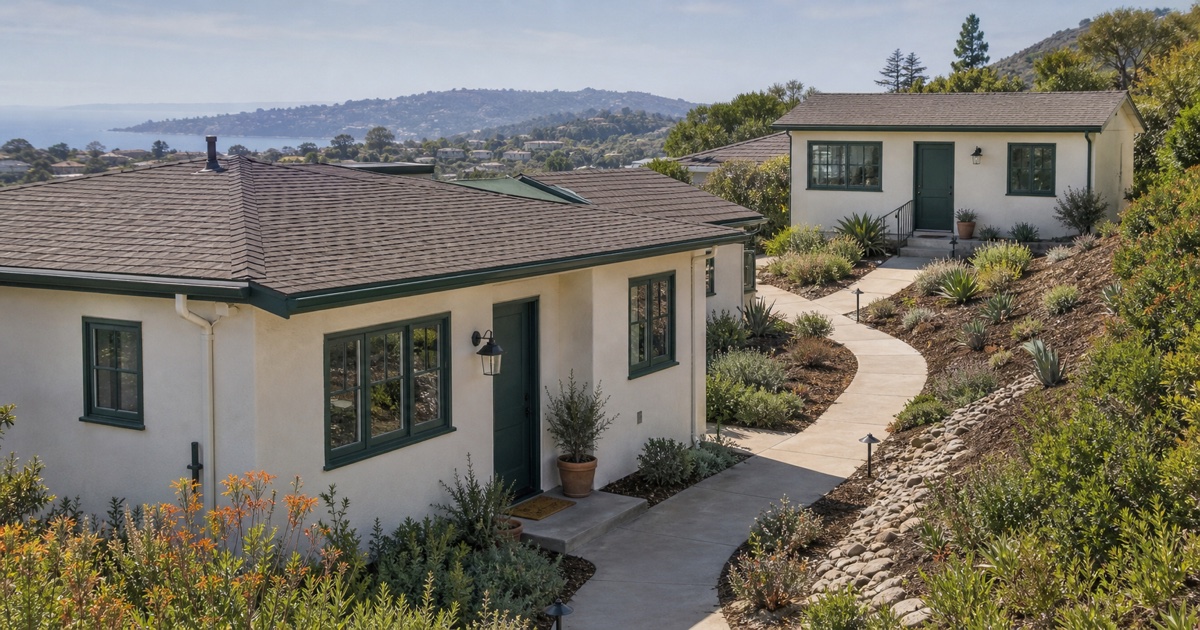
The short answer
Accessory dwelling units and junior accessory dwelling units in Laguna Beach are governed by several moving layers:
- Current California ADU statutes in Government Code sections 66310–66342.
- The City’s operative urgency ordinance.
- Laguna Beach’s certified Local Coastal Program.
- Coastal Act permitting and jurisdiction.
- Building, fire, utility, geotechnical, access, and resource requirements.
- The property’s approvals, recorded documents, and private restrictions.
The current Municipal Code Chapter 25.17 page carries an important alert: Chapter 25.17 was repealed and replaced by Urgency Ordinance No. 1713, adopted March 11, 2025, and that urgency ordinance remains in effect. The same page identifies Ordinance No. 1715, adopted March 25, 2025, as pending Coastal Commission certification.
As of July 26, 2026, the Coastal Commission’s future-agenda page identifies Local Coastal Program Amendment No. LCP-5-LGB-25-0036-1 for a future public hearing and action. In November 2025, the Commission approved an extension of its action deadline to December 5, 2026.
The online code page alone may not show which ADU rules are in force. On the application date, confirm the current urgency ordinance, any later City action, Coastal Commission certification status, and the coastal rules for the specific parcel.
Laguna Beach ADUs and JADUs generally may not be rented for fewer than 31 consecutive calendar days. Once rented long term, the owner also becomes a housing provider subject to California lease, deposit, habitability, entry, fair-housing, rent-cap, and just-cause rules as applicable.
What to do first
- Confirm the parcel and coastal jurisdiction.
- Obtain the current operative ordinance package. Include the urgency ordinance, code alert, new-laws ledger, and any later City enactment.
- Check Coastal Commission status. Do not rely on a prior-month project memo.
- Order property records. Obtain deed, survey, prior permits, certificate records, approved plans, code history, and title exceptions.
- Map constraints. Include bluff, watercourse, canyon, slope, geologic hazard, fire access, public views, public access, utilities, parking, and easements.
- Choose the ADU type. Converted, attached, detached, multifamily, and JADU paths have different consequences.
- Request a written City completeness and permit path.
- Coordinate design and legal assumptions before committing to construction cost.
- Plan the rental operation. Address term, address, utilities, access, privacy, insurance, lease, and coverage notices.
- Calendar every entitlement, permit, inspection, covenant, and rental-use condition.
What not to do
- Do not assume “ministerial” means “no coastal development permit.”
- Do not assume every City coastal decision is appealable—or unappealable—without applying current state law and jurisdiction.
- Do not design from an older codified chapter without reading the current legal-status alert and ordinances.
- Do not represent Ordinance No. 1715 as certified while the Coastal Commission lists the amendment for future action.
- Do not assume a state-law setback eliminates resource, fire, building, or geotechnical constraints.
- Do not treat an assessor record, utility meter, or old rental listing as proof that an existing unit is legal.
- Do not promise short-term-rental income from an ADU or JADU.
- Do not treat a JADU like a detached independent unit; owner occupancy and deed restrictions matter.
- Do not sign a tenant lease before final approval, addressing, safety, utility, and insurance are confirmed.
- Do not assume adding an ADU preserves every AB 1482 exemption for the property.
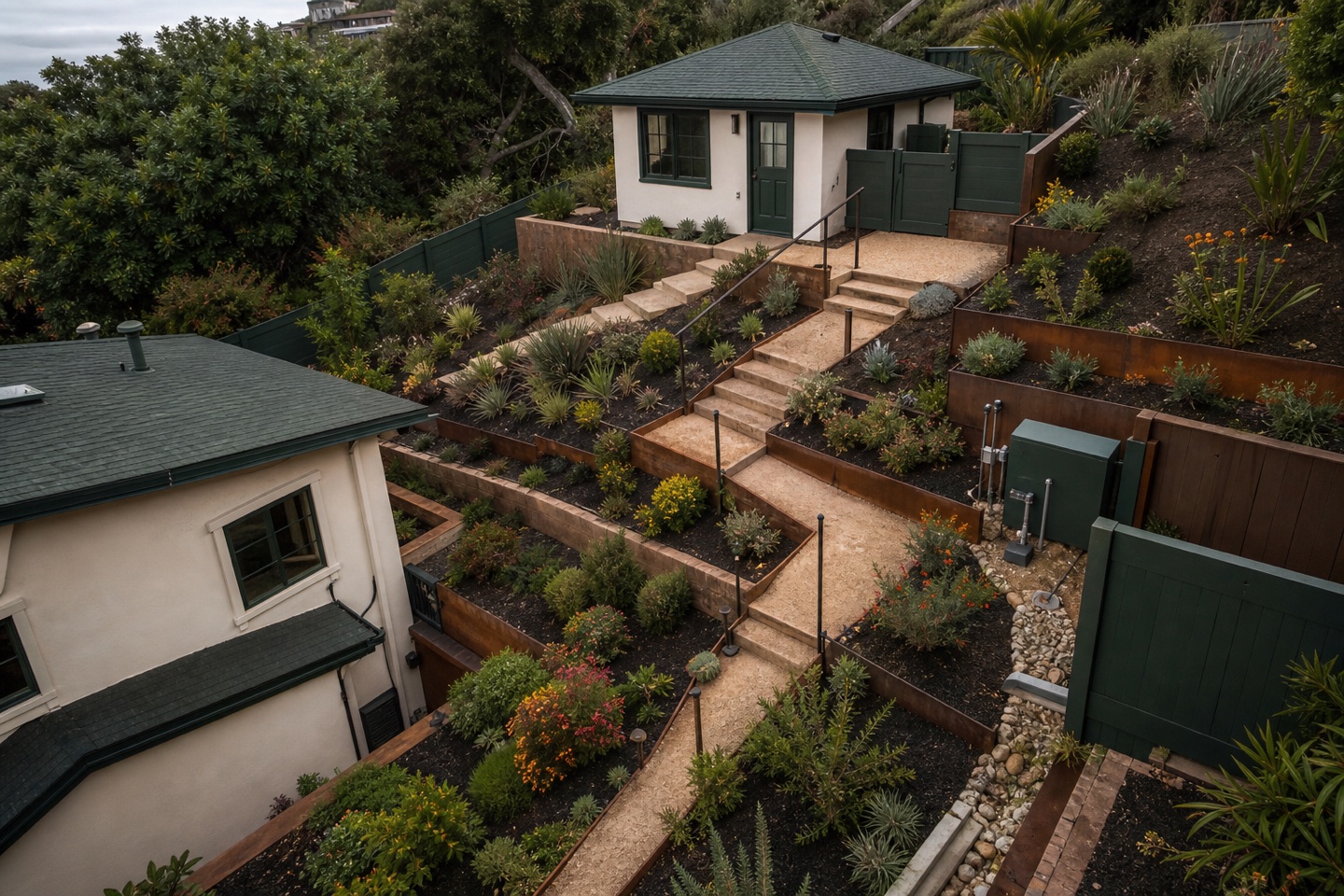
The current ordinance status
Urgency Ordinance No. 1713
Laguna Beach’s official code publisher states that Urgency Ordinance No. 1713 repealed and replaced Chapter 25.17 on March 11, 2025 and remains in effect.
An application should be checked against the full ordinance PDF, later urgency action, current state law, and City instructions—not merely the older body text displayed below the alert.
Ordinance No. 1715 and Coastal Commission certification
The City adopted Ordinance No. 1715 on March 25, 2025 as its permanent ADU amendment. The official code page labels it “Pending Coastal Commission Certification.”
The Coastal Commission received the associated amendment, LCP-5-LGB-25-0036-1, on July 18, 2025 and deemed it complete on September 9, 2025. The Commission approved a time extension in November 2025, allowing action through December 5, 2026. Its current future-agenda page lists the amendment for public hearing and action.
Certification may:
- Approve the text as submitted.
- Approve it with suggested modifications.
- Deny part or all of it.
- Require City acceptance before effective certification.
Publication and project advice must be updated when the Commission acts.
State law continues to change
California renumbered and amended its ADU statutes. The current chapter is Government Code sections 66310–66342. The California Department of Housing and Community Development’s ADU Handbook was updated in March 2026.
Use the statute and current handbook for the application date. Older references to sections 65852.2 and 65852.22 may appear in local materials but are not a reliable substitute for current text.
Coastal review is part of the project
State ADU law does not supersede the Coastal Act. Current Government Code section 66329 nevertheless adds important streamlining for coastal ADUs.
For a completed application, current law generally requires a local government to approve or deny the coastal development permit for an ADU or JADU within 60 days and does not require a public hearing. It also limits appeals of specified local ADU coastal decisions to the Coastal Commission under Public Resources Code section 30603.
Those rules do not mean that every parcel follows the same path. The owner still must identify:
- Whether the site is in certified City jurisdiction.
- Whether it is in an area of deferred certification or direct Commission jurisdiction.
- Whether development is exempt or excluded from a coastal development permit.
- Which coastal resource, hazard, access, and public-view standards apply.
- Whether another component of the project changes the permit or appeal analysis.
- Whether a prior coastal permit contains relevant conditions.
The California Coastal Commission published its final SB 1077 ADU guidance by July 1, 2026. The guidance is intended to simplify LCP amendments and ADU processing while maintaining protection for coastal resources, hazards, and public access.
Site constraints that can change the design
Bluffs, watercourses, canyons, and hazards
Laguna Beach properties can implicate:
- Oceanfront bluff setback.
- Watercourse and canyon setback.
- Landslide and geologic hazard.
- Coastal erosion and sea-level-rise exposure.
- Drainage.
- Environmentally sensitive habitat.
- Public views.
- Public trails and accessways.
Objective ADU allowances do not erase standards necessary to protect coastal resources or public safety. A current survey, geotechnical work, drainage analysis, biological review, or coastal consultant may be necessary.
Fire and emergency access
Hillside roads, driveway width, turnaround, hydrants, vegetation, building separation, fire-resistive construction, and emergency access can control what is feasible.
An ADU’s parking exemption does not authorize obstruction of emergency access. Early Fire Department review can prevent a site plan from advancing on an assumption that later fails.
Parking
State law provides multiple ADU parking exemptions. Laguna Beach’s coastal context can add questions about replacement parking and existing access.
Document:
- Existing lawful spaces.
- Garage or carport conversion.
- Coastal-zone replacement requirements.
- Transit-distance calculation.
- Permit-district restrictions.
- Fire turnaround.
- Private-road and HOA conditions.
Do not promise a “no-parking ADU” from a general summary.
Utilities and addresses
The design and rental plan should address:
- Water and sewer capacity.
- Electrical service.
- Gas or electrification.
- Separate or shared meters.
- Connection and capacity fees.
- Drainage.
- Waste collection.
- Emergency and postal address visibility.
The lease should accurately allocate shared services and explain any lawful ratio or fixed charge. Utility billing should not be improvised after occupancy.
Historic and nonconforming property
An ADU on a historic or legally nonconforming property may receive specialized treatment, but the unit still must satisfy applicable building, electrical, fire, and safety standards. Obtain the City’s approved history rather than relying on age or appearance.
ADU and JADU paths
Converted ADU
A converted ADU may use qualifying space in a residence or existing accessory structure. Confirm that the structure and proposed conversion are legal, sufficiently documented, and capable of meeting dwelling standards.
Attached or detached ADU
New floor area raises height, setback, lot coverage, resource, grading, drainage, fire, privacy, and construction-access questions. A state “guaranteed allowance” is not a design recommendation; the project still needs a buildable, approvable plan.
Multifamily ADUs
State law provides paths for conversion of qualifying nonlivable space and for detached ADUs on multifamily property. The owner must also evaluate:
- Loss of storage, parking, or tenant amenities.
- Existing lease rights.
- Construction access and quiet enjoyment.
- Utility capacity.
- Habitability during work.
- Rent-control treatment of existing and new units.
JADUs
A JADU is generally limited to 500 square feet and located within a single-family residence, with an efficiency kitchen and permitted sanitation arrangement. Current local materials require:
- Owner occupancy in the primary dwelling or JADU, subject to state-law exceptions.
- A recorded deed restriction.
- No separate sale from the primary residence.
- Compliance with current access and dimensional rules.
The owner-occupancy and deed file should be reviewed again before sale, estate planning, or change in use.
Unpermitted units and legalization
An existing kitchen, guest room, garage conversion, or rented space is not necessarily a legal ADU.
Current state law limits denial of some applications to legalize units constructed before specified dates, but health-and-safety and substandard-building exceptions remain. Coastal, fire, structural, utility, septic, access, and title issues may still need correction.
A legalization file should include:
- Evidence of construction date.
- Historic permits and plans.
- Photographs and floor plans.
- Utility history.
- Rental and occupancy records.
- Code complaints and notices.
- Structural, electrical, plumbing, fire, and geotechnical assessments.
- Coastal jurisdiction and prior permit conditions.
Before contacting a tenant about access or future occupancy, coordinate the code and habitability strategy. An application can surface conditions that require repair or temporary relocation.
Affordable-housing incentives
Laguna Beach has offered a permit-fee refund path for ADUs committed as affordable housing. Current local material uses a minimum 10-year recorded covenant or deed restriction and City program requirements.
Before accepting an incentive, review:
- Eligible household and rent limits.
- Verification and reporting.
- Covenant duration.
- Owner obligations after a vacancy.
- Enforcement.
- Effect on financing, sale, estate planning, and title.
- Interaction with state rent and just-cause law.
The fee refund should be weighed against the full restriction, not treated as free project capital.
Rental-use rules
No stays shorter than 31 consecutive days
Current Laguna Beach ADU rules prohibit renting an ADU or JADU for fewer than 31 consecutive calendar days.
A 31-day form does not cure a recurring weekend or weekly use. Booking calendar, guest turnover, platform listing, possession, and actual occupancy should all match the longer-term rental model.
Laguna Beach Short-Term Lodging Compliance addresses the separate city program, but an ADU should not be assumed eligible for it.
Lease and operations
Before renting, prepare:
- Property-specific lease and required addenda.
- Approved unit address and legal description.
- Rent and deposit terms.
- Utility allocation.
- Parking and access.
- Shared yard, laundry, storage, mailbox, and waste rules.
- Owner entry procedure.
- Fire, evacuation, and maintenance information.
- Insurance coordination.
- Condition photographs and move-in documents.
The lease should not promise space, parking, storage, or privacy that the approved plan does not provide.
Rent-cap and just-cause coverage
Adding or renting an ADU can change the state coverage analysis.
Do not assume:
- Every ADU is exempt.
- Owner occupancy creates one universal exemption.
- The owner-occupied duplex exemption applies to a detached ADU.
- The main home and ADU have identical coverage.
- New-construction status lasts indefinitely.
Run separate Civil Code sections 1947.12 and 1946.2 analyses for the unit and configuration. Deliver any required notices accurately.
Existing tenants during construction
An owner building or converting an ADU on occupied property should review:
- Lease rights to garages, yards, parking, storage, and access.
- Lawful entry and construction notice.
- Dust, noise, utilities, security, and work hours.
- Habitability and quiet enjoyment.
- Disability accommodations.
- Temporary relocation.
- Rent reductions or agreements.
- Insurance and contractor controls.
Planning approval does not rewrite the existing lease.
Acquisition diligence
A buyer expecting ADU income should verify:
- The City’s current ADU ordinance status.
- Coastal jurisdiction and LCP amendment status.
- Prior coastal, planning, building, and grading approvals.
- Certificate of occupancy or final inspection.
- Approved floor plan and unit address.
- Deed restrictions and affordable-housing covenants.
- JADU owner-occupancy obligations.
- Unpermitted work.
- Fire and geotechnical records.
- Utility and sewer capacity.
- Existing tenant rights.
- HOA and title restrictions.
- Rent-cap and just-cause coverage.
- Insurance and lender requirements.
A rendering does not prove the project is approved, and a land-use approval does not mean the unit has final clearance to be rented.

Common owner scenarios
Detached hillside ADU
Assume the state allows an ADU by size and setback. The site may still require analysis of slope, geology, fire access, drainage, building separation, coastal resources, and construction access. Test those constraints before finalizing cost or rent assumptions.
Garage conversion near the coast
Assume an existing garage is converted. The owner should verify structure legality, coastal development permit path, replacement-parking rules, utilities, fire separation, existing lease rights, and final inspection.
Renting a new ADU
Assume the unit is final and approved. The owner still needs a compliant lease, condition file, utility allocation, insurance, 31-day minimum use, and separate rent-cap and just-cause analysis.
Legalizing an older guest unit
Assume the owner has evidence the unit predates the relevant state cutoff. Legalization protections may limit denial for some violations, but safety, substandard-building, coastal, and site issues remain. Do not promise continued tenant occupancy before the review.
These examples use limited assumptions and do not decide a particular project.
Common mistakes
- Reading the stale body of an online code without the current ordinance alert.
- Treating a pending LCP amendment as certified.
- Treating a 60-day process as automatic approval of an incomplete or unsafe project.
- Omitting coastal jurisdiction from early feasibility work.
- Designing over a bluff, watercourse, accessway, or fire constraint.
- Assuming no parking is required without reviewing replacement and safety issues.
- Failing to prove an existing structure is legal.
- Using short-term lodging in an ADU.
- Ignoring JADU owner occupancy and recorded restrictions.
- Renting before final approval and addressing.
- Failing to revisit AB 1482 coverage after adding the unit.
When legal review is worthwhile
Review is useful before:
- Purchasing property based on ADU potential.
- Selecting a converted, attached, detached, multifamily, or JADU path.
- Submitting a coastal or City application.
- Committing to design, contractor, or financing cost.
- Legalizing an occupied unit.
- Recording an affordable-housing or JADU covenant.
- Leasing the completed unit.
- Selling or transferring property with an ADU.
- Responding to a City, Coastal Commission, HOA, lender, or tenant issue.
Law Laguna can prepare a current entitlement-status memorandum, coordinate the legal record with the design team, review title and tenancy issues, and build the long-term rental compliance file. Land-use, coastal, architectural, engineering, tax, and litigation specialists may be needed for parts of the project.
Questions property owners often ask
Which Laguna Beach ADU ordinance is currently operative?
The official code page states that Urgency Ordinance No. 1713, adopted March 11, 2025, repealed and replaced Chapter 25.17 and remains in effect. Ordinance No. 1715 is labeled pending Coastal Commission certification. Verify the status on the application date.
Has the Coastal Commission certified Ordinance No. 1715?
As of July 26, 2026, the Commission lists LCP-5-LGB-25-0036-1 for future hearing and action. Its deadline was extended to December 5, 2026. Confirm the current Commission status before acting.
Does an ADU require a coastal development permit?
It depends on the property, jurisdiction, project, exclusions, and current law. State law streamlines coastal ADU decisions, but it does not supersede the Coastal Act.
Can a Laguna Beach ADU be rented on Airbnb?
Current local ADU rules prohibit rental for fewer than 31 consecutive calendar days. Do not use a short-term-lodging listing for an ADU without a current, property-specific legal determination.
Does a JADU require owner occupancy?
Current local materials require the owner to reside in the primary dwelling or JADU, subject to applicable state-law exceptions, and require a recorded restriction. Confirm the current ordinance and owner facts.
Can an unpermitted unit be legalized?
Potentially. State law protects some older units from denial based solely on certain violations, but health, safety, substandard-building, coastal, fire, utility, and site constraints remain.
Is an ADU exempt from rent caps and just cause?
Not automatically. The unit, certificate, ownership, owner occupancy, configuration, notices, tenancy, and local law must be analyzed separately under Civil Code sections 1947.12 and 1946.2.
Can a landlord take back tenant parking or a garage for an ADU?
Not merely because the City may approve the project. Review the lease, tenant’s existing rights, notice, habitability, consideration, and any negotiated change before altering possession or services.
Related services and guides
Official legal sources
- City of Laguna Beach ADU portal
- Laguna Beach Chapter 25.17 status, new laws, and ordinance links
- California ADU statutes, Government Code sections 66310–66342
- California HCD ADU Handbook
- California Coastal Commission SB 1077 ADU guidance
- California Coastal Commission future agenda items
- Commission staff report for LCP-5-LGB-25-0036-1 time extension
Review a Laguna Beach ADU Plan
Law Laguna can help determine which rules are actually operative, identify the property and tenancy constraints, and create a coordinated entitlement-to-rental roadmap.
Review a Laguna Beach ADU Plan
Do not send confidential information or documents until Law Laguna confirms conflicts, scope, and availability.