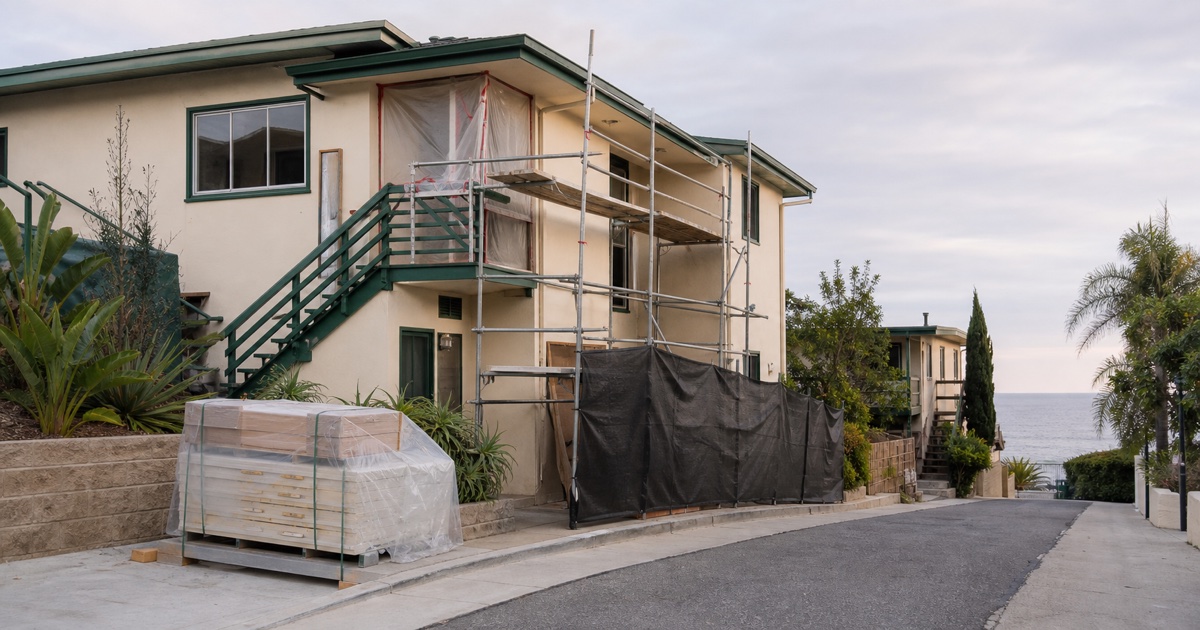
The short answer
Laguna Beach Municipal Code Chapter 7.90 supplements California law when both of these conditions are present:
- The tenancy is subject to the just-cause requirements of Civil Code section 1946.2; and
- The owner terminates the tenancy based on an intent to demolish or substantially remodel the residential property.
In that setting, the owner must file a copy of the termination notice and specified supporting material with the City through its designated portal within three calendar days after serving the tenant. The notice must also tell the tenant that a copy will be provided to the City and made publicly searchable.
If the tenant later accepts the owner’s offer to re-rent the remodeled unit, the owner must file that acceptance with the City within five days after receipt.
If the owner misses the required City filing, the tenant may use that failure as a defense in an eviction lawsuit. Chapter 7.90 also directs the City to withhold building-permit inspections for the substantial remodel when the owner has not complied.
The city filing does not make an otherwise defective state notice valid. Before serving, the owner must also establish coverage, a qualifying scope of work, permits or contracts, vacancy duration, relocation, notice language, and any re-rental obligation under current California law.
What to do first
- Confirm that the property is inside Laguna Beach.
- Determine whether section 1946.2 just cause applies. Do not assume coverage or exemption.
- Confirm the actual project. Separate demolition, qualifying substantial remodel, ordinary repair, and cosmetic improvement.
- Obtain the permit or signed contract required by state law.
- Create a realistic construction sequence. Document why safe occupancy is unreasonable and why at least 30 consecutive days of vacancy are required.
- Review relocation and re-rental duties.
- Prepare the state notice and Laguna Beach public-filing language together.
- Calendar the City’s three-calendar-day deadline before service.
- Preserve the complete submission and confirmation.
- Calendar the five-day acceptance filing and every permit-inspection milestone.
What not to do
- Do not file every Laguna Beach eviction notice under Chapter 7.90.
- Do not call painting, flooring, appliance replacement, decorating, or minor repair a substantial remodel.
- Do not serve from a contractor estimate when current state law requires a qualifying permit or signed contract.
- Do not count business days instead of calendar days.
- Do not assume the city filing replaces service on the tenant.
- Do not omit the statement that the filing will be publicly searchable.
- Do not request remodel inspections before confirming Chapter 7.90 compliance.
- Do not ignore the tenant’s request or acceptance of an offer to reoccupy.
- Do not begin marketing or use the property in a manner inconsistent with the stated ground.
- Do not assume Laguna Beach’s lack of broad local rent control eliminates state rent-cap, just-cause, relocation, or re-rental rules.
When Chapter 7.90 applies
The chapter is intentionally narrow. It applies where a landlord terminates a covered tenancy under Civil Code section 1946.2 for:
- Intent to demolish the residential real property; or
- Intent to substantially remodel the residential real property.
It does not create a city filing rule for every:
- Nonpayment notice.
- Lease-breach notice.
- Nuisance case.
- Owner-move-in notice.
- Voluntary move-out.
- Tenant buyout.
- Fixed-term expiration.
- Tenancy exempt from section 1946.2.
Another state or local rule may govern those events, but Chapter 7.90 should not be cited beyond its text.
Coverage comes first
California’s rent cap and just-cause provisions use separate tests. A single-family home, condominium, newer unit, owner-occupied configuration, or ADU is not self-classifying.
Before relying on Chapter 7.90—or concluding it does not apply—review:
- Property type and certificate of occupancy.
- Title and ownership entity.
- Required exemption language.
- Owner occupancy.
- Original move-in date.
- Current occupants.
- Any local or contractual restriction.
AB 1482 Exemptions and Property Coverage explains the separate state tests.
What qualifies as a substantial remodel
Chapter 7.90 uses the state-law concept. The work must involve:
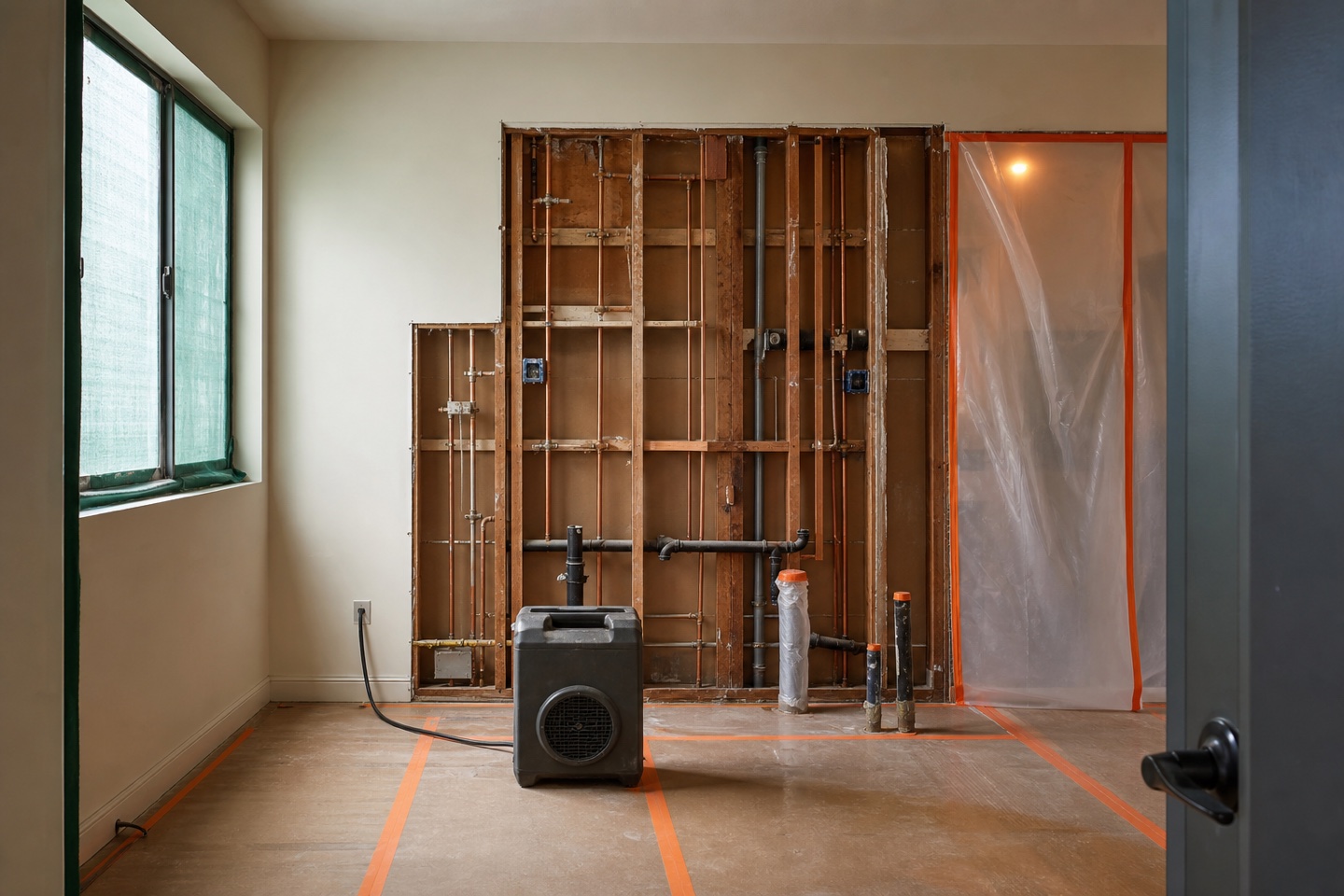
- Replacement or substantial modification of structural, electrical, plumbing, or mechanical systems requiring a permit; or
- Hazardous-material abatement under applicable law.
The work must require the tenant to leave because it cannot reasonably be completed safely with the tenant in place, and it must require vacancy for at least 30 consecutive days.
The following are not enough by themselves:
- Cosmetic improvements.
- Painting and decorating.
- Minor repairs.
- Work that can be completed safely while the tenant remains.
The project file should answer four questions:
- What exact systems or hazardous material are involved?
- What permit or abatement authority is required?
- Why is occupancy unsafe or unreasonable during the work?
- Why does the actual sequence require at least 30 consecutive days?
A large budget is not the legal test.
State notice requirements remain controlling
Current Civil Code section 1946.2 requires a substantial-remodel notice to contain detailed information. Depending on the project, that includes:
- The statutory statement.
- A description of the work.
- The anticipated duration.
- A copy of the qualifying permit or signed contract.
- Information about the tenant’s right to request an offer to re-rent the remodeled unit.
- The owner’s contact process for that request.
Ordinary termination-notice timing and service rules also apply. The notice should be prepared from the current statute on the service date; an old property-management template may omit required language added in 2024.
Demolition
A demolition project should be documented from the actual government approval, scope, and schedule. “Major renovation” and “demolition” are not interchangeable descriptions. Coastal, planning, building, environmental, and utility approvals may affect whether and when the plan is real.
Laguna Beach filing workflow
Within three calendar days after tenant service
The owner must file through the City’s designated online portal:
- A copy of the termination notice; and
- A copy of the permits or signed contract, if applicable.
If the portal is unavailable, Chapter 7.90 directs the filing to the City Manager or designee.
The deadline runs from service on the tenant. A weekend or holiday can therefore matter. Prepare the upload package and assign responsibility before serving.
Required tenant disclosure
The termination notice must tell the tenant:
- A copy of the notice will be provided to the City; and
- The filing will be publicly searchable.
This is in addition to, not a substitute for, the statements required by state law.
Within five days after a tenant’s acceptance
If the tenant accepts an offer to re-rent the remodeled unit, the owner must file the tenant’s acceptance with the City within five days after receiving it.
The owner should:
- Preserve the tenant’s request and acceptance.
- Date-stamp receipt.
- Submit the complete record.
- Save confirmation.
- Calendar the future offer and communication obligations.
Consequences of a missed filing
Chapter 7.90 states that failure to file the notice is an affirmative defense in an unlawful-detainer action. The City must also withhold building-permit inspections for the substantial remodel when the owner has not complied with the filing requirement.
Those consequences connect the tenancy and construction files. A manager who serves the notice, a contractor who schedules inspection, and an owner who controls the project should operate from one calendar.
Do not assume a late filing automatically cures the issue. Obtain legal advice about the specific notice, deadline, and procedural posture.
Relocation and rent waiver
For a tenancy covered by section 1946.2, the owner generally must choose between:
- A direct relocation payment equal to one month of the tenant’s rent within 15 calendar days after service; or
- A written waiver of the final month’s rent before it becomes due.
The state relocation amount is a credit against another applicable relocation requirement. Other state, local, subsidy, agreement, or order-based duties may affect the calculation.
Preserve:
- The lawful rent amount.
- The notice of relocation rights.
- Payment instrument and delivery.
- Proof of receipt or attempted delivery.
- Any final-month waiver language.
- Reconciliation with any other relocation amount.
Failure to comply with section 1946.2’s relocation provision renders the termination notice void.
Re-rental and return planning
Current state law requires the substantial-remodel notice to give the tenant a way to request an offer to reoccupy. Chapter 7.90 adds the five-day City filing when the tenant accepts such an offer.
Before service, decide:
- Who will maintain the tenant’s current contact information.
- How the owner will document a request.
- How construction completion will be tracked.
- What lawful rent will apply to an offer.
- Who will make and deliver the offer.
- How an acceptance will be filed with the City.
Do not wait until the remodel is complete to build the return process.
Project documents that should agree
| Document | What it should establish |
|---|---|
| Permit or signed contract | Qualifying work, property, scope, and authority |
| Construction schedule | At least 30 consecutive days and unsafe or unreasonable occupancy |
| Tenant notice | Current state text, project details, relocation, return, and City disclosure |
| City filing | Complete notice and supporting material within three calendar days |
| Relocation record | Correct amount or waiver and timely performance |
| Re-rent file | Tenant request, offer, acceptance, and five-day filing |
| Permit-inspection file | Chapter 7.90 compliance before inspection scheduling |
| Post-work use | Conduct consistent with the stated termination ground |
Inconsistent documents are often more damaging than missing detail.

Common owner scenarios
Kitchen and bathroom upgrade
Assume the owner plans cabinets, counters, tile, fixtures, and paint. Those facts alone describe cosmetic improvement or work that may be safely sequenced with occupancy. A large price tag and owner preference for vacancy do not establish substantial remodel.
Electrical and plumbing replacement under permits
Assume issued permits require substantial system replacement throughout the unit, occupancy cannot reasonably remain safe, and the documented sequence requires more than 30 consecutive days. Those facts can support further analysis, but the owner still needs the current notice, relocation, City filing, and return process.
Full demolition and redevelopment
Assume the owner has a genuine demolition project. State just-cause coverage, approved project documentation, relocation, notice, Chapter 7.90 filing, coastal and local approvals, and future use must be coordinated before service.
Tenant agrees to leave voluntarily
A signed voluntary surrender can be a different legal path. It should not be backfilled as a substantial-remodel termination. Review voluntariness, consideration, deposit handling, local buyout requirements if any, and possession terms.
These examples use limited assumptions and do not decide a particular matter.
Common mistakes
- Treating Chapter 7.90 as a citywide eviction registry for all grounds.
- Serving before confirming section 1946.2 coverage.
- Omitting the public-search disclosure.
- Missing the three-calendar-day filing window.
- Filing the notice but not the permit or contract.
- Using a project description that does not match the permit.
- Ignoring the minimum 30-consecutive-day vacancy test.
- Paying relocation after the statutory deadline.
- Failing to file a tenant’s re-rent acceptance within five days.
- Separating property management and permit scheduling into uncoordinated files.
When legal review is worthwhile
Review is especially useful before:
- Telling the tenant the owner plans to renovate or demolish.
- Finalizing the contractor scope and schedule.
- Applying for a project whose tenancy consequences are uncertain.
- Serving a no-fault notice.
- Making the relocation payment.
- Filing with the City.
- Responding to a tenant’s re-rent request.
- Scheduling inspections.
- Changing the project or post-construction use.
Law Laguna can prepare a state-and-city checklist, review coverage, compare the notice to the permit and contract, calculate relocation, create the filing calendar, and organize the re-rental record.
Law Laguna can assess the tenancy, documents, local requirements, available options, and pre-litigation strategy. If a filed court action becomes necessary, the firm can help prepare an organized transition to appropriate litigation counsel.
Questions property owners often ask
Must every Laguna Beach eviction notice be filed with the City?
No. Chapter 7.90 applies when state just cause is required and the owner terminates for intent to demolish or substantially remodel. Other grounds are outside this particular chapter.
How quickly must the filing be made?
Within three calendar days after the owner serves the tenant.
What must be filed?
The termination notice and the applicable permits or signed contract. The current portal and City instructions should be confirmed before service.
What must the tenant notice say about the City?
It must state that a copy will be provided to the City and will be publicly searchable, in addition to all current state-law content.
Does cosmetic remodeling qualify?
No. Painting, decorating, minor repair, and other cosmetic work do not qualify. The permitted system work or hazardous-material abatement must make occupancy unreasonable and require at least 30 consecutive days of vacancy.
What happens if the owner does not file?
The failure is an affirmative defense to an unlawful-detainer action, and Chapter 7.90 requires the City to withhold building-permit inspections for the substantial remodel.
Is relocation required?
For a covered section 1946.2 no-fault termination, the owner generally must pay one month’s rent within 15 calendar days after notice or waive the final month’s rent in writing. Other applicable law can require more.
Does Laguna Beach have broad local rent control?
The City’s current housing page states that Laguna Beach does not maintain a local rent-control ordinance. California rent-cap and just-cause law, Chapter 7.90, and other local property rules can still apply.
Related services and guides
Official legal sources
Review a Laguna Beach Remodel Termination
The useful review happens before service, while the project, notice, relocation, City filing, and construction schedule can still be made consistent.
Review a Laguna Beach Remodel Termination
Do not send confidential information or documents until Law Laguna confirms conflicts, scope, and availability.